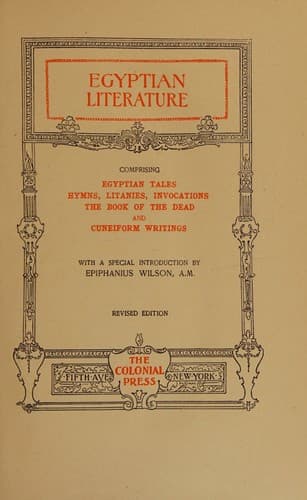
Egyptian Literature: Comprising Egyptian tales, hymns, litanies, invocations, the Book of the Dead, and cuneiform writings
Religion
Egyptian Literature: Comprising Egyptian tales, hymns, litanies, invocations, the Book of the Dead, and cuneiform writings
Egyptian literature -- Translations into English
23.5 Their eye looks down at thy hand: “Slave, give camel for the Mohar to
eat.” Thou makest thy name of Mohar known,
23.6 master of the captains of Egypt; thy name becomes like that of
Kadjarti, the Chief of Assur, after his encounter with
23.7 the hyenas in the wood, on the defile infected by the wood-hidden
Shasous.
23.8 Some of these were four cubits from the nose to the heel: fierce
without mildness, not listening to caresses.
23.9 Thou art alone, no guide with thee, nor troop behind thee. Didst thou
not meet the Marmar? He makes thee
24.1 pass: thou must decide on departing, and knowest not the road.
Anxiety seizes thee, thy hair bristles up:
24.2 thy soul places itself in thy hand: thy way is full of rocks and
rolling stones, no practicable passage; the road is obstructed by
24.3 hollies, nopals,(460) aloes and bushes called “dog-wolf’s shoes.” On
one side is the precipice, on the other rises the vertical wall of the
mountain.
24.4 Thou must advance going down. Thy car strikes the wall and thy horses
are startled by the rebound:
24.5 they stop at the bottom of the harness; thy reins are precipitated
and left behind; all fall down, thou passest on.
24.6 The horses break the pole and move it out of the path; you cannot
think of refastening them, cannot repair
24.7 them. The seats are precipitated from their places; the horses refuse
to be loaded with them. Thy heart fails thee. Thou beginnest to
24.8 reel; the sky is clear: thirst torments thee: the enemy is behind
thee, thou beginnest to quake;
25.1 a thorny bush hinders thee; thou placest it aside; the horses wound
themselves.
25.2 At this moment thou art stretched flat and beholdest the sad
satisfaction (of thy state?). Entering Joppa
25.3 thou seest a verdant enclosure in a ripe state. Thou makest an
opening for eating the fruit. Thou findest a pretty
25.4 young girl who takes care of the gardens: she yields herself to thee
as a companion, and yields to thee her secret charms.
25.5 Thou art perceived: thou art subjected to an interrogatory; thou art
recognized as a Mohar. Thy tie of
25.6 sweet servitude, is settled by a compromise. Each night thou liest
down; a rug of hair
25.7 is on thee: thou imprudently fallest asleep, a robber takes away thy
bow, thy dagger,
25.8 and thy quiver: thy reins are cut in the night, and thy horses run
away. Thy valet takes a sliding path: the road mounts before him, he
breaks
26.1 thy car in pieces ... thy armor-pieces fall on the ground.
26.2 They sink in the sand. Thou must have recourse to prayers, and thou
gettest puzzled in thy address. Give me victuals and water, and I
26.3 shall reach my safety. They pretend to be deaf, they do not listen:
they do not consent. Thou orderest:
26.4 “Pass to the forge! Pass through the workshops!” Workmen in wood and
metals and workmen in leather come before thee: they do
26.5 all thou wishest. They repair thy car, leaving aside all
unserviceable pieces: they nail on again
Public-domain text, read in full here on John Shaqi.
Reviews
Reviews
No reviews yet
Be the first to share your thoughts on this work.
Elsewhere in the archive
Join the Discussion
Join the discussion
Sign in to leave a comment or review.
Sign InorCreate an account