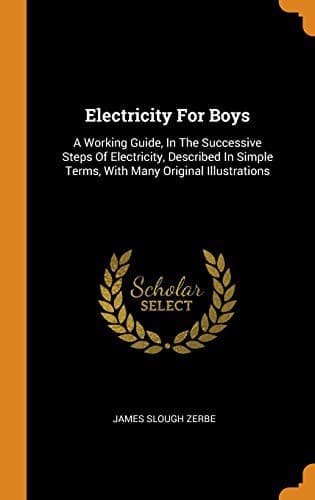
Electric apparatus and appliances; Electrical engineering -- Juvenile literature
Decomposing Liquids. Making Hydrogen and Oxygen. Purifying Water.
Rust. Oxygen as a Purifier. Composition of Water. Common Air Not a
Good Purifier. Pure Oxygen a Water Purifier. The Use of Hydrogen in
Purification. Aluminum Electrodes. Electric Hand Purifier.
Purification and Separation of Metals. Electroplating. Plating Iron
with Copper. Direction of Current.
XIV. ELECTRIC HEATING. THERMO-ELECTRICITY Page 135
Generating Heat in a Wire. Resistance of Substances. Signs of
Connectors. Comparison of Metals. A Simple Electric Heater. How to
Arrange for Quantity of Current Used. An Electric Iron.
Thermo-Electricity Converting Heat Directly into Electricity Metals.
Electric, Positive, Negative. Thermo-electric Coupler.
XV. ALTERNATING CURRENTS, CHOKING COIL, TRANSFORMER Page 145
Direct Current. Alternating Current. The Magnetic Field. Action of a
Magnetized Wire. The Movement of a Current in a Charged Wire. Current
Reversing Itself. Self-Induction. Brushes in a Direct Current Dynamo:
Alternating, Positive and Negative Poles. How an Alternating Current
Dynamo is Made. The Windings. The Armature Wires. Choking Coils. The
Transformer. How the Voltage is Determined. Voltage and Amperage in
Transformers.
XVI. ELECTRIC LIGHTING Page 161
Early conditions. Fuels. Reversibility of Dynamo. Electric arc.
Mechanism to maintain the arc. Resistance coil. Parallel carbons for
making arc. Series current. Incandescent system. Multiple circuit.
Subdivision of electric light. The filament. The glass bulb. Metallic
filaments. Vapor lamps. Directions for improvements. Heat in electric
lighting. Curious superstitions concerning electricity. Magnetism.
Amber. Discovery of the properties of a magnet. Electricity in
mountain regions. Early beliefs as to magnetism and electricity. The
lightning rod. Protests against using it. Pliny's explanation of
electricity.
XVII. POWER, AND VARIOUS OTHER ELECTRICAL MANIFESTATIONS Page 175
Early beliefs concerning the dynamo. Experiments with magnets.
Physical action of dynamo and motor. Electrical influence in windings.
Comparing motor and dynamo. How the current acts in a dynamo. Its
force in a motor. Loss in power transmission. The four ways in which
power is dissipated. Disadvantages of electric power. Its advantages.
Transmission of energy. High voltages. The transformer. Step-down
transformers. Electric furnaces. Welding by electricity. Merging the
particles of the joined ends.
XVIII. X-RAY, RADIUM AND THE LIKE Page 184
Public-domain text, read in full here on John Shaqi.
Reviews
Reviews
No reviews yet
Be the first to share your thoughts on this work.
Join the Discussion
Join the discussion
Sign in to leave a comment or review.
Sign InorCreate an account