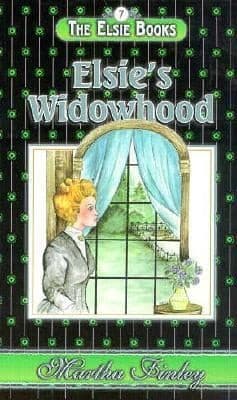
Elsie's Widowhood: A Sequel to Elsie's ChildrenFinley, Martha
General
Elsie's Widowhood: A Sequel to Elsie's Children
Finley, Martha
Christian life -- Juvenile fiction; Dinsmore, Elsie (Fictitious character) -- Juvenile fiction; Domestic fiction; Religious fiction
The tea hour brought them all together again--all the children--but
father and mother were missing. Oh this gathering about the table was
almost the hardest thing of all! It had been wont to be a time of glad,
free, cheerful, often mirthful intercourse between parents and children;
no rude and noisy hilarity, but the most enjoyable social converse and
interchange of thought and feeling, in which the young people, while
showing the most perfect respect and deference to their parents, and
unselfish consideration for each other, were yet under no galling
constraint, but might ask questions and give free expression to their
opinions, if they wished; and were indeed encouraged to do so.
But what a change had a few days brought! There was an empty chair that
would never again be filled by him to whom one and all had looked up
with the tenderest filial love and reverence. All eyes turned toward it,
then were suffused with tears, while one and another vainly strove to
suppress the bursting sobs.
They could not sit down to the table. They drew close together in a
little weeping group.
The grandparents came in, and Mr. Dinsmore, trying to gather them all
in his arms, caressed them in turn, saying in broken, tender tones, "My
dear children, my poor dear children! I will be a father to you. I
cannot supply his place, but will do so as nearly as I can. You know, my
darlings, my sweet Elsie's children, that I have a father's love for
you."
"Yes, grandpa, we know it," "Dear grandpa, we're glad we have you left
to us," sobbed one and another.
"And mamma, dear, precious mamma! O grandpa, is she sick?"
"Not exactly sick, my darlings," he said, "but very much worn out. We
must let her rest."
"Can't we see her? can't we go to her?"
"Not now, not to-night, I think. I left her sleeping, and hope she will
not wake for some hours."
At that the little ones seemed nearly heartbroken. "How could they go to
their beds without seeing mamma?"
But Elsie comforted them. She would help mammy to put them to bed; and
oh it was the best of news that dear mamma was sleeping! because if she
did not she would soon be quite ill.
Molly Percival, because of her crippled condition, making locomotion so
difficult, seldom joined the family at table, but took her meals in her
own room, a servant waiting upon her and her mother, who, in her new
devotion to poor Molly, preferred to eat with her.
The appointments of their table were quite as dainty as those of the
other, the fare never less luxurious.
A very tempting repast was spread before them to-night, but Molly could
not eat for weeping.
Her mother, tasting one dish after another with evident enjoyment, at
length thought fit to expostulate with her.
"Molly, why do you cry so? I do wish you would stop it and eat your
supper."
"I'm not hungry, mother."
"That's only because you're fretting so; and what's the use? Mr.
Travilla's better off; and besides he was nothing to you."
Public-domain text, read in full here on John Shaqi.
Reviews
Reviews
No reviews yet
Be the first to share your thoughts on this work.
Join the Discussion
Join the discussion
Sign in to leave a comment or review.
Sign InorCreate an account