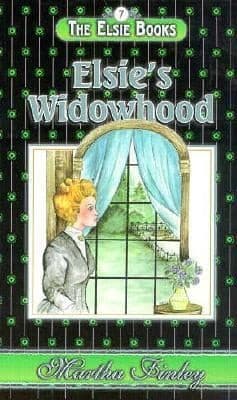
Elsie's Widowhood: A Sequel to Elsie's ChildrenFinley, Martha
General
Elsie's Widowhood: A Sequel to Elsie's Children
Finley, Martha
Christian life -- Juvenile fiction; Dinsmore, Elsie (Fictitious character) -- Juvenile fiction; Domestic fiction; Religious fiction
Her strongest support in this, as in every trial of her life, was in her
almighty Saviour; on Him she leaned every hour with a simple childlike
faith and confidence in His unerring wisdom and infinite love; but it
was very sweet to lean somewhat upon the strength and wisdom of the
earthly father also, and to feel that the shield of his care and
protection was interposed between her and the cold world.
Both his and Rose's companionship had ever been delightful to her, and
were now a great solace and pleasure.
She gave no indulgence to a spirit of repining because her chief earthly
treasure had been taken from her for the remainder of her life in this
world, but was filled with gratitude for those blessings that were left,
ever deeming God's goodness to her far beyond her deserts.
And her own sorrow was often half forgotten in tender compassion for her
fatherless children. For their sakes, as well as because such was her
Christian duty, she strove after a constant abiding cheerfulness; and
not without success.
But it was not sought in forgetfulness of the dear one gone. They talked
freely and tenderly of him, his looks, his words, his ways; his present
happiness and the joy of the coming reunion with him. He was not dead to
them, but living in the blessed land where death could never enter, a
land that grew more real and attractive because he was there.
Elsie found great comfort in her children--dear as her own offspring,
and dearer still because they were his also. They were very good and
obedient, loving her so devotedly that the very thought of grieving her
was pain.
Her unselfish love seemed to call forth its counterpart in them: they
vied with each other in earnest efforts to make up to her the loss of
their father's love and ever watchful tender care.
They were very fond of their grandfather too, and always yielded a ready
obedience to his commands or directions.
He never had shown to them the sternness that had been one of the trials
of their mother's youthful days, but was patient and gentle, as well as
firm and decided. Mr. Travilla's example as a father had not been wasted
on him.
He was wont to say "he had three reasons for loving them--that they were
the children of his friend, Elsie's children, and his own
grandchildren."
It was very evident that they were very dear to him, and they loved him
dearly in return.
Mr. Travilla had left no debts, no entanglements in his affairs; his
will was short, plainly expressed, and its conditions such as there was
no difficulty in carrying out.
Elsie and her father were joint executors, and were associated in the
guardianship of the children also. The estate was left to her during her
natural life, to Edward after her death.
Hitherto the education of all the sons and daughters had been carried on
at home, but now Edward was to go to college.
Public-domain text, read in full here on John Shaqi.
Reviews
Reviews
No reviews yet
Be the first to share your thoughts on this work.
Join the Discussion
Join the discussion
Sign in to leave a comment or review.
Sign InorCreate an account