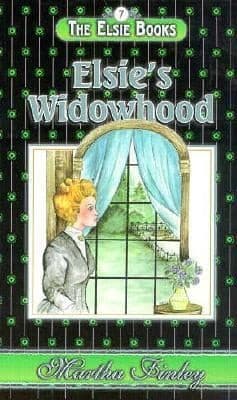
Elsie's Widowhood: A Sequel to Elsie's Children — John Shaqi
Elsie's Widowhood: A Sequel to Elsie's ChildrenFinley, Martha
General
Elsie's Widowhood: A Sequel to Elsie's Children
Finley, Martha
Christian life -- Juvenile fiction; Dinsmore, Elsie (Fictitious character) -- Juvenile fiction; Domestic fiction; Religious fiction
Mr. Dinsmore found his whole party gathered in their private parlor and
anxiously awaiting his coming. As he entered there was a general
exclamation of relief and pleasure on the part of the ladies and his
father, and a joyous shout from Rosie and Walter as each hastened to
claim a seat upon his knee.
"My dears, grandpa is tired," said their mother.
"Not too tired for this," he said, caressing them with all a father's
fondness.
"Are you not late, my dear?" asked his wife; "we were beginning to feel
a trifle anxious about you."
"Rather, I believe. I will explain the cause at another time," he said
pleasantly.
Tea was brought in, family worship followed the meal, and shortly after
that Elsie retired with her little ones to see them to bed; the others
drew round the table, each with book or work, Harold pushing Molly's
chair up near the light; and Mr. Dinsmore, seating himself beside his
wife, on a distant sofa, gave her in subdued tones an account of his
interview with Boyd.
"Poor wretch!" she sighed, "what can we do for him? It is too dreadful
to think of his dying as he has lived."
"It is, indeed! We will consult with Elsie as to what can be done."
"The very mention of his name must be a pain to her; can she not be
spared it?"
"I will consider that question. You know I would not willingly pain
her," he said, with a tenderly affectionate glance at his daughter as
she re-entered the room; then rising he paced the floor, as was his
habit when engaged in deep or perplexing thought.
Elsie watched him a little anxiously, but without remark until all the
others had retired, leaving her alone with him and Rose.
Then going to him where he sat, in a large easy chair beside the table,
looking over the evening paper, "Papa," she said, laying her hand
affectionately on his arm, "I fear you are finding my affairs
troublesome."
"No, my dear child, not at all," he answered, throwing down the paper
and drawing her to a seat upon his knee.
"It seems quite like old, old times," she said with a smile, gazing
lovingly into his eyes, then stealing an arm about his neck and laying
her cheek to his.
"Yes," he said, fondling her; "why should I not have you here as I used
to twenty odd years ago? You are no larger or heavier nor I a whit less
strong and vigorous than we were then."
"How thankful I am for that last," she returned, softly stroking his
face, "and it is very pleasant occasionally to imagine myself your own
little girl again. But something is giving you anxiety, my dear father.
Is it anything in which I can assist you?"
"Yes; but I fear I can hardly explain without calling up painful
memories."
He felt her start slightly, and a low-breathed sigh met his ear.
"Still say on, dear papa," she whispered tremulously.
"Can you bear it?" he asked; "not for me, but for another--an enemy."
"Yes, the Lord will give me strength. Of whom do you speak?"
"George Boyd."
Public-domain text, read in full here on John Shaqi.
Reviews
Reviews
No reviews yet
Be the first to share your thoughts on this work.
Join the Discussion
Join the discussion
Sign in to leave a comment or review.
Sign InorCreate an account