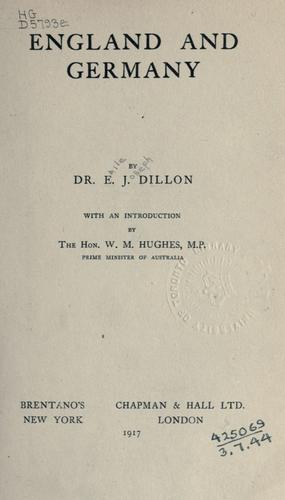
Germany -- Foreign relations; World War, 1914-1918; World War, 1914-1918 -- Economic aspects
Everything that human foresight could think of was carefully studied,
everything that human ingenuity could provide for was thoroughly
effected and systematized. Royal dynasties were founded abroad by
German princes. German colonies settled in Russia, Poland, Palestine
and Brazil. German schools were opened in Roumania, Spain, Asia Minor,
the Ottoman Empire, the Tsardom. Foreign newspapers were bought or
subsidized. Protestant sects with pro-German tendencies were
encouraged. Banks were founded with Entente capital and employed to
ruin the trade of the nations that subscribed it. Colonies of
mechanics, clerks, middlemen were settled in every European country
and colony and obtained control of the nation's industries and trade.
Special legislation was enacted in Berlin to enable the German to
become a foreign subject in externals while bound by all the duties of
a citizen of his own country.
As the hour for the military and naval struggle was drawing near
intestine strife was industriously stirred up in all those countries
whose rivalry the Germans had reason to apprehend. Emissaries were
despatched to Egypt who made common cause with the disaffected and
restless elements of the population, cultivated friendship with the
Senussi and smuggled in arms to would-be African rebels. In India
German "scientific explorers" hobnobbed with the natives, criticized
the state of "serfage" to which British rule had reduced one of the
most highly civilized races of mankind, and made overtures to the
Afghans. To Abyssinia another "scientific expedition" was despatched,
which consisted of a number of German officers and one explorer. After
a circuitous and difficult journey it arrived at Massaua in March
1915, and requested the authorization of the Italian Governor of
Erithea, the Marquess Salvago-Raggi, to push on to Adis Abeba, in
order to re-establish communications between the German Legation there
and the Berlin Foreign Office. The real object of the expedition, as
the Italian Government well knew, was to incite the young Negus to
attack the British in the Sudan and the French in Djibuti. But Italy,
although still neutral, understood too well how difficult it would
have been for her to limit Abyssinia's warlike operations to the
French and British possessions and ward them off from her own
colonies. Baron Sonnino accordingly declined to accord the permission
asked for, and consented only to allow a large consignment of
"correspondence" to be sent on.[107]
[107] Cf. _L'Idea Nazionale_, March 7, 1915; _Tribuna_, April
1, 1915.
Public-domain text, read in full here on John Shaqi.
Reviews
Reviews
No reviews yet
Be the first to share your thoughts on this work.
Elsewhere in the archive
Join the Discussion
Join the discussion
Sign in to leave a comment or review.
Sign InorCreate an account