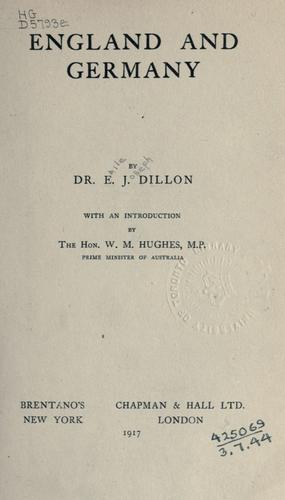
Germany -- Foreign relations; World War, 1914-1918; World War, 1914-1918 -- Economic aspects
Chaos, waste and a variety of abuses that pressed heavily on the
poorer classes marked the efforts made by the Russian Government to
cope with the scarcity of fuel, corn and other necessaries which began
to be felt soon after the war. The rolling stock, it was complained,
was utterly insufficient, yet it was found possible to transport
1,000,000 poods[127] weight of mineral water of doubtful quality. When
trains arrived bringing supplies to the suffering population, it
turned out that there were no hands to unload the waggons. And when
labour was requisitioned, vehicles were not to be had. In October 1915
on the rails of Moscow station five thousand waggons, laden with
life's necessaries, stood waiting and waiting in vain for the
unskilled labour which ought to have been abundant, considering the
number of the population and of the refugees. At the same time 2000
waggons were on the rails of the Petrograd station, their contents
lying unutilized.[128] It is only by the lack of order and
organization that one can explain the facts that in Petrograd the
inhabitants have no butter, while in the places where butter is made
it is being sold cheaper than before, at 12 in lieu of 16 to 18
roubles a pood. In the province of Ekaterinograd, mines which own
800,000 poods of coal cannot get more than a few waggon loads of it
every month.
[127] A pood is equal to 36.11 lbs.
[128] Cf. _Novoye Vremya_, October 9, 1915.
Russia has incomparably more than enough fuel, without importing any,
to satisfy all the needs of her 180,000,000 inhabitants. But owing to
the insufficiency of communications, and still more to the lack of
forethought and enterprise, the population of many cities and towns
underwent serious hardships in consequence of the impossibility of
acquiring coal or wood. In September 1915 the Petrograd region could
obtain no more than 65 per cent. of the necessary quantity, and a
month later only 49 per cent. In Moscow the plight of the inhabitants
was worse. In September they could get but 26 per cent. of their needs
and in October 40 per cent. According to the Minister of Commerce, who
volunteered these data, the condition of the towns of Rostoff,
Novotcherkassk, Nakhitchevan, Taganrog, Ekaterinodar and others was
not a whit better. The city of Vyatka was, according to the _Novoye
Vremya_,[129] in January 1916 without fuel, while the mercury
registered 30 degrees Reaumur below freezing-point. The unfortunate
citizens heated their homes with fragments of hoardings, tables, desks
and stools. And yet there is abundant fuel in the superb forests with
which Vyatka is surrounded, and, what is more to the point, the city
authorities had received during the preceding spring 60,000 roubles
for the purpose of purchasing a supply of wood for the winter. But
they did nothing, organization not being one of their strong points.
[129] The German press welcomes items of information like
this. Cf. _Frankfurter Zeitung_, January 13, 1916.
Public-domain text, read in full here on John Shaqi.
Reviews
Reviews
No reviews yet
Be the first to share your thoughts on this work.
Elsewhere in the archive
Join the Discussion
Join the discussion
Sign in to leave a comment or review.
Sign InorCreate an account