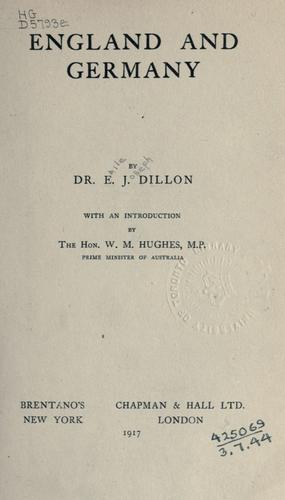
Germany -- Foreign relations; World War, 1914-1918; World War, 1914-1918 -- Economic aspects
Live stock in Russia has diminished during the war to a much larger
extent than was anticipated. The peasantry, owing to the prohibition
of alcohol, now consume from 150 to 200 per cent. more meat than
before, and what with the refugees from Poland, the prisoners of war
and the increased needs of the army, no less than 20 per cent. of the
cattle of the entire Empire was used during the first eighteen
months[130] and 30 per cent. of the stock of all European Russia. In
consequence of the shortage and of the irregularity of the transport,
three days of abstinence from meat were ordained. Yet in January 1916
a discovery was casually made in the Kieff forests between Byelitch
and Pushtsha Voditzka, which caused considerable lifting of the
eyebrows. About 8000 head of cattle and several thousand sheep were
found with no cowherds, shepherds or owners, wandering about from
place to place. Scores of them were succumbing to hunger and cold
every day. The paths in the woods were covered with the dead bodies of
kine, calves and sheep. The journal which records this fact affirms
that these herds belong to the Union of Zemstvos, which had purchased
them from the peasants who had to flee from the occupied provinces.
The President of the Union of Zemstvos is said to have confirmed this
odd story with the qualification that the forlorn horned cattle and
sheep are the property not of the Union of Zemstvos, but of the
Ministry of Agriculture, which is alone answerable.[131]
[130] Over a hundred million head.
[131] Cf. the Russian journal, _Kieff_, also the _Frankfurter
Zeitung_, January 29, 1916.
The card system of distributing provisions that are scarce found its
way first into Germany and then into Austria and Russia. But in the
last-named empire it was much less successful than in the two first
mentioned. According to the Petrograd journals in Pskoff, where it was
tried, many individuals got no cards, and therefore no provisions.
Many who possessed the cards found nothing to buy. And some of those
who obtained the articles they wanted paid dearer for them than if
they had bought them without cards. And as with cards one has to lay
in a stock to last a fortnight, the poorer families were unable to
utilize them.[132]
[132] _Novoye Vremya_, January 1916. _Frankfurter Zeitung_,
January 21, 1916.
In France, as well as in Russia, the professional organizers,
especially the civilians, were very much adrift. In the army all the
sterling qualities of the French nation at its best, and many that
were deemed extinct, but are now seen to have been only dormant, shone
forth resplendent. Valour, fortitude, staying power, self-abnegation
for the common good, became household virtues. Friends and foes were
equally surprised. But the civil administration remained
well-meaning, patriotic and unregenerate to the last. The old Adam
lived and acted up to his reputation.
Public-domain text, read in full here on John Shaqi.
Reviews
Reviews
No reviews yet
Be the first to share your thoughts on this work.
Elsewhere in the archive
Join the Discussion
Join the discussion
Sign in to leave a comment or review.
Sign InorCreate an account