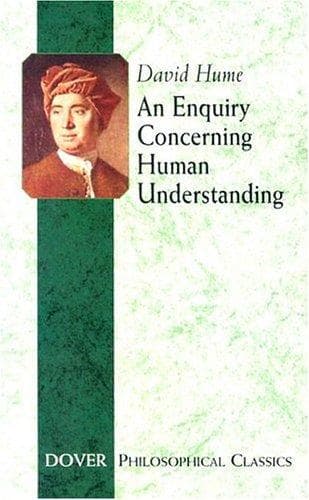
These principles account for the great liberty of the press in these
kingdoms, beyond what is indulged in any other government. It is
apprehended that arbitrary power would steal in upon us, were we not
careful to prevent its progress, and were there not any easy method of
conveying the alarm from one end of the kingdom to the other. The spirit
of the people must frequently be roused, in order to curb the ambition
of the court; and the dread of rousing this spirit must be employed to
prevent that ambition. Nothing so effectual to this purpose as the
liberty of the press; by which all the learning, wit, and genius of the
nation, may be employed on the side of freedom, and every one be
animated to its defence. As long, therefore, as the republican part of
our government can maintain itself against the monarchical, it will
naturally be careful to keep the press open, as of importance to its own
preservation.[1]
It must however be allowed, that the unbounded liberty of the press,
though it be difficult, perhaps impossible, to propose a suitable remedy
for it, is one of the evils attending those mixed forms of government.
[1] Since, therefore, the liberty of the press is so essential to the
support of our mixed government, this sufficiently decides the second
question, _Whether this liberty be advantageous or prejudicial,_ there
being nothing of greater importance in every state than the preservation
of the ancient government, especially if it be a free one. But I would
fain go a step further, and assert, that such a liberty is attended with
so few inconveniences, that it may be claimed as the common right of
mankind, and ought to be indulged them almost in every government except
the ecclesiastical, to which, indeed, it would be fatal. We need not
dread from this liberty any such ill consequences as followed from the
harangues of the popular demagogues of Athens and Tribunes of Rome. A
man reads a book or pamphlet alone and coolly. There is none present
from whom he can catch the passion by contagion. He is not hurried away
by the force and energy of action. And should he be wrought up to never
so seditious a humour, there is no violent resolution presented to him
by which he can immediately vent his passion. The liberty of the press,
therefore, however abused, can scarce ever excite popular tumults or
rebellion. And as to those murmurs or secret discontents it may
occasion, it is better they should get vent in words, that they may come
to the knowledge of the magistrate before it be too late, in order to
his providing a remedy against them. Mankind, it is true, have always a
greater propension to believe what is said to the disadvantage of their
governors than the contrary; but this inclination is inseparable from
them whether they have liberty or not. A whisper may fly as quick, and
be as pernicious as a pamphlet. Nay, it will be more pernicious, where
men are not accustomed to think freely, or distinguish betwixt truth and
falsehood.
Public-domain text, read in full here on John Shaqi.
Reviews
Reviews
No reviews yet
Be the first to share your thoughts on this work.
Join the Discussion
Join the discussion
Sign in to leave a comment or review.
Sign InorCreate an account