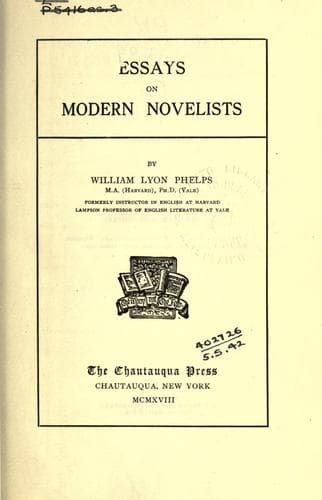
The objections usually formulated against novels as a university study
are about as follows: (_a_) the study of fiction is unacademic--that is,
lacking in dignity; (_b_) students will read too many novels anyway, and
the emphasis should therefore be thrown on other forms of literary art;
(_c_) most recent and contemporary fiction is worthless, and if novels
are to be taught at all, the titles selected should be confined entirely
to recognised classics; (_d_) many of the novels of to-day are immoral,
and the reading of them will corrupt rather than develop adolescent
minds; (_e_) they are too "easy," too interesting, and a course confined
to them is totally lacking in mental discipline. These objections, each
and all, contain some truth, and demand a serious answer.
That the study of fiction is unacademic is a weighty argument, but its
weight is the mass of custom and prejudice rather than solid thought. In
old times, the curriculum had little to do with real life, so that the
most scholarly professors and the most promising pupils were often
plentifully lacking in common sense. Students gifted with real
independence of mind, marked with an alert interest in the life and
thought about them, chafed irritably under the old-fashioned course of
study, and often treated it with neglect or open rebellion. What Thomas
Gray said of the Cambridge curriculum constitutes a true indictment
against eighteenth-century universities; and it was not until very
recent times that such studies as history, European literature, modern
languages, political economy, natural sciences, and the fine arts were
thought to have equal academic dignity with the trinity of Latin, Greek,
and mathematics. There are, indeed, many able and conscientious men who
still believe that this trinity cannot be successfully rivalled by any
other possible group of studies. Now the novel is the most prominent
form of modern literary art; and if modern literature is to be studied
at all, fiction cannot be overlooked. The profound change brought about
in university curricula, caused largely by the elective system, is
simply the bringing of college courses of study into closer contact
with human life, and the recognition that what young men need is a
general preparation to live a life of active usefulness in modern social
relations.
That students read too many novels anyway--that is, in proportion to
their reading in history and biography--is probably true. But the
primary object of a course in novel-reading is not to make the student
read more novels, instead of less, nor to substitute the reading of
fiction for the reading of other books. The real object is (after a
cheerful recognition of the fact that he will read novels anyway) to
persuade him to read them intelligently, to observe the difference
between good novels and bad, and so to become impatient and disgusted
with cheap, sensational, and counterfeit specimens of the novelist's
art.
Public-domain text, read in full here on John Shaqi.
Reviews
Reviews
No reviews yet
Be the first to share your thoughts on this work.
Elsewhere in the archive
Join the Discussion
Join the discussion
Sign in to leave a comment or review.
Sign InorCreate an account