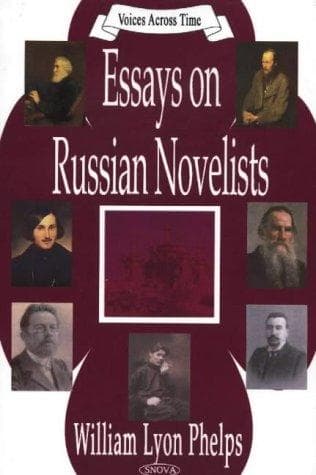
Like Gogol and Artsybashev, Chekhov was a man of the South, being born
at Taganrog, a seaport on a gulf of the Black Sea, near the mouth of
the river Don. The date of his birth is the 17 January 1860. His
father was a clever serf, who, by good business foresight, bought his
freedom early in life. Although the father never had much education
himself, he gave his four children every possible advantage. Anton
studied in the Greek school, in his native city, and then entered the
Faculty of Medicine at the University of Moscow. "I don't well
remember why I chose the medical faculty," he remarked later, "but I
never regretted that choice." He took his degree, but entered upon no
regular practice. For a year he worked in a hospital in a small town
near Moscow, and in 1892 he freely offered his medical services during
an epidemic of cholera. His professional experiences were of immense
service to him in analysing the characters of various patients whom he
treated, and his scientific training he always believed helped him
greatly in the writing of his stories and plays, which are all
psychological studies.
He knew that he had not very long to live, for before he had really
begun his literary career signs of tuberculosis had plainly become
manifest. He died in Germany, the 2 July 1904, and his funeral at
Moscow was a national event.
Chekhov was a fine conversationalist, and fond of society; despite the
terrible gloom of his stories, he had distinct gifts as a wit, and was
a great favourite at dinner-parties and social gatherings. He joked
freely on his death-bed. He was warm-hearted and generous, and gave
money gladly to poor students and overworked school-teachers. His
innate modesty and lack of self-assertion made him very slow at
personal advertisement, and his dislike of Tolstoi's views prevented
at first an acquaintance with the old sage. Later, however, Tolstoi,
being deeply interested in him, sought him out, and the two writers
became friends. At this time many Russians believed that Chekhov was
the legitimate heir to Tolstoi's fame.
In 1879, while still in the University of Moscow, Chekhov began to
write short stories, of a more or less humorous nature, which were
published in reviews. His first book appeared in 1887. Some critics
sounded a note of warning, which he heeded. They said "it was too bad
that such a talented young man should spend all his time making people
laugh." This indirect advice, coupled with maturity of years and
incipient disease, changed the writer's point of view, and his best
known work is typically Russian in its tragic intensity.
Public-domain text, read in full here on John Shaqi.
Reviews
Reviews
No reviews yet
Be the first to share your thoughts on this work.
Elsewhere in the archive
Join the Discussion
Join the discussion
Sign in to leave a comment or review.
Sign InorCreate an account