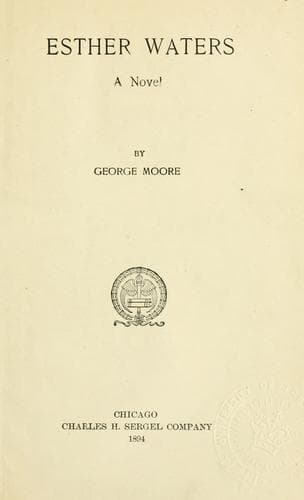
Domestic fiction; England -- Fiction; Mothers and sons -- Fiction; Unmarried mothers -- Fiction; Women household employees -- Fiction
As they walked home Esther told Fred the story of her betrayal. He was
interested in the story, and was very sorry for her.
"I love you, Esther; it is easy to forgive those we love."
"You're very good; I never thought to find a man so good." She looked up
in his face; her hand was on the gate, and in that moment she felt that
she almost loved him.
XXIV
Mrs. Humphries, an elderly person, who looked after a bachelor's
establishment two doors up, and generally slipped in about tea-time, soon
began to speak of Fred as a very nice young man who would be likely to
make a woman happy. But Esther moved about the kitchen in her taciturn
way, hardly answering. Suddenly she told Mrs. Humphries that she had been
to Dulwich with him, and that it was wonderful how he and Jackie had taken
to one another.
"You don't say so! Well, it is nice to find them religious folks less
'ard-'earted than they gets the name of."
Mrs. Humphries was of the opinion that henceforth Esther should give
herself out as Jackie's aunt. "None believes them stories, but they make
one seem more respectable like, and I am sure Mr. Parsons will appreciate
the intention." Esther did not answer, but she thought of what Mrs.
Humphries had said. Perhaps it would be better if Jackie were to leave off
calling her Mummie. Auntie! But no, she could not bear it. Fred must take
her as she was or not at all. They seemed to understand each other; he was
earning good money, thirty shillings a week, and she was now going on for
eight-and-twenty; if she was ever going to be married it was time to think
about it.
"I don't know how that dear soul will get on without me," she said one
October morning as they jogged out of London by a slow train from St.
Paul's. Fred was taking her into Kent to see his people.
"How do you expect me to get on without you?"
Esther laughed.
"Trust you to manage somehow. There ain't much fear of a man not looking
after his little self."
"But the old folk will want to know when. What shall I tell them?"
"This time next year; that'll be soon enough. Perhaps you'll get tired of
me before then."
"Say next spring, Esther."
The train stopped.
"There's father waiting for us in the spring-cart. Father! He don't hear
us. He's gone a bit deaf of late years. Father!"
"Ah, so here you are. Train late."
"This is Esther, father."
Public-domain text, read in full here on John Shaqi.
Reviews
Reviews
No reviews yet
Be the first to share your thoughts on this work.
Elsewhere in the archive
Join the Discussion
Join the discussion
Sign in to leave a comment or review.
Sign InorCreate an account