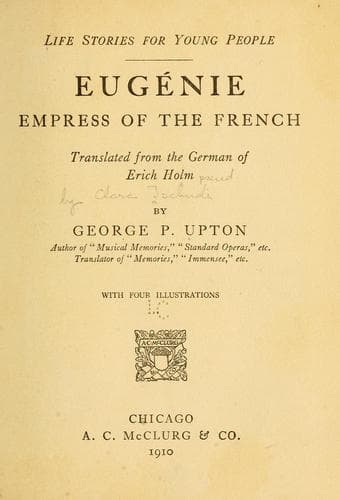
Eugénie, Empress, consort of Napoleon III, Emperor of the French, 1826-1920; Napoleon III, Emperor of the French, 1808-1873 -- Marriage
In the capital great preparations had been made for their reception,
Napoleon having ridden about everywhere in person to see that all was
complete. At the railway station, which was covered with floral
decorations, eighty beautiful young girls were waiting to present the
Queen with bouquets. Through a sea of light from lamps and torches, amid
the strains of music, the rolling of drums, and incessant cheering, the
royal party made its way through the Bois to St. Cloud, where the
Empress, Princess Mathilde, and all the ladies of the court were waiting
to receive it.
The World’s Exposition had just been opened in Paris at that time, and
the week spent by the English guests at the French court was devoted to
seeing that, as well as the sights of the city itself. Besides this, a
number of state entertainments were given in their honor, concluding
with a ball at Versailles that exceeded in magnificence any given since
the time of Louis the Fourteenth. Three thousand invitations were issued
for this, and all the _élite_ of France were present, with many
distinguished foreigners. The gay uniforms and court dresses of the men
and the gorgeous costumes of the ladies, who vied with one another in
their display of jewels, laces, and brocades, made a scene of surpassing
brilliancy.
The Empress, who appeared at this ball in all her radiant loveliness,
was taken ill during the supper and obliged to retire to her own
apartments. On several other occasions also she was indisposed and
forced to excuse herself. Yet though unable to take an active part in
public festivities, Eugénie and Victoria became all the more intimate in
their own private circle. Napoleon and the Prince Consort sang duets
together. Victoria made several sketches of the country about St. Cloud
and often visited Eugénie in her own apartments where the two princesses
sat for hours together in confidential talk. A friendship so close and
lasting between such widely different natures must have been founded on
more than physical attraction. A mutual appreciation of each other’s
best qualities drew them together. Eugénie was bolder and more
independent than her friend, and freer from prejudice; but Victoria had
the strength and repose that come from an inherited consciousness of
power, while they were united by a common devotion to their own
families, and pride in the nations over which they ruled.
Chapter V
Birth of the Prince Imperial
Public-domain text, read in full here on John Shaqi.
Reviews
Reviews
No reviews yet
Be the first to share your thoughts on this work.
Join the Discussion
Join the discussion
Sign in to leave a comment or review.
Sign InorCreate an account