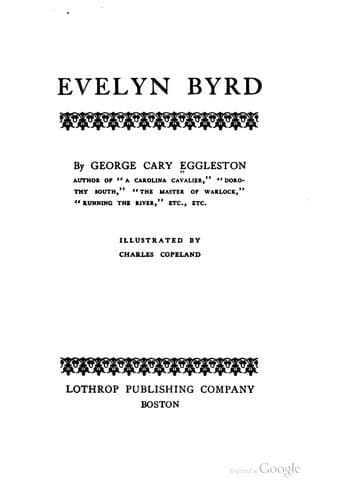
Virginia -- History -- Civil War, 1861-1865 -- Fiction
“If justice were done, you, sir, would be dragged from the bench that
you dishonour by sitting upon it. Oh, I know, you can send me to jail
for speaking these truths in your presence. I trust you will try that.
If, by any martyrdom of mine, I can bring the corruption of such judges
as you are to the knowledge and attention of this community, I shall
feel that my work is well done. In the meantime I shall set another to
secure for this helpless girl a writ of habeas corpus which shall get
for her, in another and more righteous court, the fair hearing which
you insolently and criminally deny to her here. Now send me to jail
in punishment of the immeasurable contempt I feel for a court where
justice is betrayed for money, and where human rights are bartered away
for a price.”
The judge was very angry, and a lot of men surrounded my old lawyer.
But what happened afterward I have never known. For no sooner was I
put in Campbell’s charge than I was hurried to a train, and the next
morning I heard him say to one of the men he had with him:—
“We are out of Illinois now; we’ve beaten that writ of habeas corpus.”
Then he turned to me and said:—
“If you care for your own comfort, you will recognise me as your
guardian, and behave yourself accordingly.”
I reckon you must be tired reading by this time, Dorothy, so you are
to take a rest here, and I’ll write the remainder of my story in other
chapters. I’m afraid I’m making my story tedious; but I’ve fully made
up my mind to tell it all, because I don’t know what you will care
for in it, and what will seem unimportant to you. If I try to shorten
it by leaving out anything, the thing I leave out may happen to be
precisely the thing that would change your opinion of me. I want to
deal absolutely honestly with you; so I am telling you everything I
remember.
XXVII
KILGARIFF’S PERPLEXITY
DURING the two days that Dorothy had thus far given to the reading of
Evelyn’s book, Kilgariff had been chafing impatiently. He wanted to go
back to Petersburg and active duty, and he wanted, before doing so, to
ride over to Branton and “talk it out with Evelyn,” as he formulated
his thoughts in his own mind.
He could do neither, for the reason that his wound began to trouble
him again, and Arthur Brent, upon examining it, condemned him to spend
another week or ten days in the house.
So far as “talking it out with Evelyn” was concerned, it was perhaps
fortunate that he was compelled to submit to an enforced delay. For
he really did not know what he was to say to Evelyn; and the more he
thought about the matter, the more he did not know.
Public-domain text, read in full here on John Shaqi.
Reviews
Reviews
No reviews yet
Be the first to share your thoughts on this work.
Elsewhere in the archive
Join the Discussion
Join the discussion
Sign in to leave a comment or review.
Sign InorCreate an account