Virginia -- History -- Civil War, 1861-1865 -- Fiction
“I beg your pardon, Kilgariff,” hastily spoke Captain Pollard, “if I
have said anything to wound you; I could not know—”
“It is not that,” responded the sergeant-major. But he added nothing to
the declaration for a full minute afterward, during which time he was
manifestly struggling to control himself. Finally recovering his calm,
he said:—
“It is very kind of you, Captain, and I thank you for it. But I cannot
accept your offer of service. I must remain as I am. I ought to have
remained a private, as I at first intended. It is very ungracious in me
not to tell you the wherefore of this, but I cannot, and your already
demonstrated respect for my privacy will surely forbid you to resent
a reserve concerning myself which I am bound to maintain. If you do
resent it, or if it displeases you in the least, I beg you to accept my
resignation as your sergeant-major, and let me return to my place among
the men as a private in the battery.”
“No,” answered Pollard, decisively. “If the army cannot have the
advantage of your service in any higher capacity, I certainly shall not
let myself lose your intelligence and devotion as my staff-sergeant.
Believe me, Kilgariff, I spoke only for your good and the good of the
service.”
“I quite understand, Captain, and I thank you. But with your permission
we will let matters remain as they are.”
All this occurred about a week before the events related in the first
chapter of this story.
III
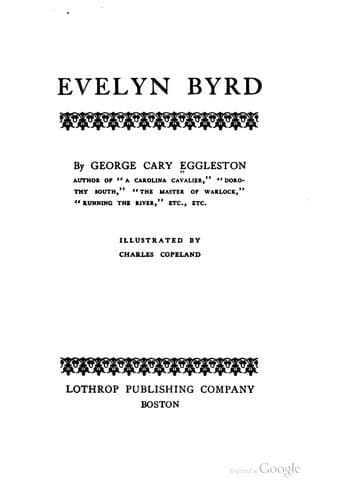
EVELYN BYRD
WHEN the girl whom Kilgariff had rescued from the burning building was
delivered into Dorothy Brent’s hands, that most gracious of gentlewomen
received her quite as if her coming had been expected, and as if
there had been nothing unusual in the circumstances that had led to
her visit. Dorothy was too wise and too considerate to question the
frightened girl about herself upon her first arrival. She saw that she
was half scared and wholly bewildered by what had happened to her,
added to which her awe of Dorothy herself, stately dame that the very
young wife of Doctor Brent seemed in her unaccustomed eyes, was a
circumstance to be reckoned with.
“I must teach her to love me first,” thought Dorothy, with the old
straightforwardness of mind. “Then she will trust me.”
So, after she had hastily read Pollard’s note and characterised it as
“just like a man not to find out the girl’s name,” she took the poor,
frightened, fawnlike creature in her arms, saying, with caresses that
were genuine inspirations of her nature:—
“Poor, dear girl! You have had a very hard day of it. Now the first
thing for you to do is to rest. So come on up to my room. You shall
have a refreshing little bath—I’ll give it to you myself with Mammy’s
aid—and then you shall go regularly to bed.”
“But,” queried the doubting girl, “is it permitted to—”
Public-domain text, read in full here on John Shaqi.
Reviews
Reviews
No reviews yet
Be the first to share your thoughts on this work.
Join the Discussion
Join the discussion
Sign in to leave a comment or review.
Sign InorCreate an account