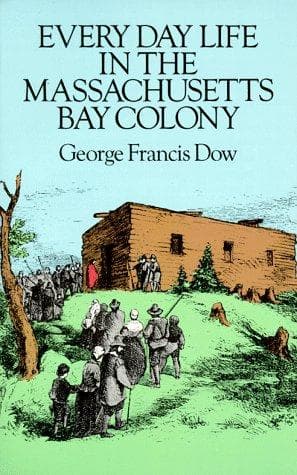
Every Day Life in the Massachusetts Bay ColonyDow, George Francis
History
Every Day Life in the Massachusetts Bay Colony
Dow, George Francis
Massachusetts -- Social life and customs -- To 1775
The struggling communities that had planted themselves along the
shores of the Massachusetts Bay largely had refused to conform to
the rules and ordinances of the English Church. If the records of
the Quarterly Courts are studied it will be seen that the settlers
also failed to obey the rules and laws laid down by the magistrates
of their own choosing. To be sure there were large numbers of
indentured servants and the rough fishermen along the coastline have
always been unruly. Much also may be attributed to the primitive
and congested life in the new settlements. Simple houses of but few
rooms and accommodating large families, surely are not conducive to
gentle speech or modesty of manners nor to a strict morality. The
craving desire for land holding, and the poorly defined and easily
removed bounds naturally led to frequent actions for trespass,
assault, defamation, slander and debt. The magistrates exercised
unusual care in watching over the religious welfare of the people
and in providing for the ministry. It has been stated frequently
that in the olden times everyone went to church. The size of the
meetinghouses, the isolated location of many of the houses, the
necessary care of the numerous young children, and the interesting
side lights on the manners of the times which appear in the court
papers, all go to prove that the statement must not be taken
literally. Absence from meeting, breaking the Sabbath, carrying a
burden on the Lord's Day, condemning the church, condemning the
ministry, scandalous falling out on the Lord's Day, slandering the
church, and other misdemeanors of a similar character were frequent.
A number of years before the Quakers appeared in the Colony it
was no unusual matter for some one to disturb the congregation by
public speeches either in opposition to the minister or to some one
present. Zaccheus Gould, a very large landholder, in Topsfield, in
the time of the singing the psalm one Sabbath afternoon sat himself
down upon the end of the table about which the minister and the
chief of the people sat, with his hat on his head and his back
toward all the rest of them that sat about the table and although
spoken to altered not his posture; and the following Sabbath after
the congregation was dismissed he haranged the people and ended by
calling goodman Cummings a "proud, probmatical, base, beggarly, pick
thank fellow." Of course the matter was ventilated in the Salem
Court.
Public-domain text, read in full here on John Shaqi.
Reviews
Reviews
No reviews yet
Be the first to share your thoughts on this work.
Elsewhere in the archive
Join the Discussion
Join the discussion
Sign in to leave a comment or review.
Sign InorCreate an account