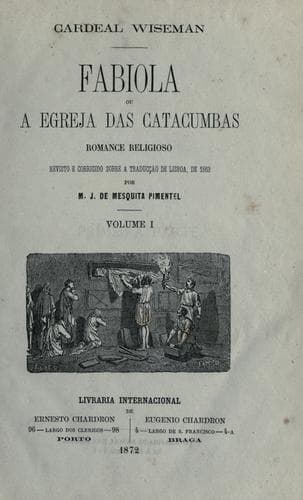
Fabiola; Or, The Church of the CatacombsWiseman, Nicholas Patrick
HistoryHistory
Fabiola; Or, The Church of the Catacombs
Wiseman, Nicholas Patrick
Christian fiction; Church history -- Primitive and early church, ca. 30-600 -- Fiction; Historical fiction
We need not remind our readers that the office then performed was
essentially, and in many details, the same as they daily witness at the
Catholic altar. Not only was it considered, as now, to be the Sacrifice
of Our Lord’s Body and Blood, not only were the oblation, the
consecration, the communion alike, but many of the prayers were
identical; so that the Catholic hearing them recited, and still more the
priest reciting them, in the same language as the Roman Church of the
Catacombs spoke, may feel himself in active and living communion with
the martyrs who celebrated, and the martyrs who assisted at, those
sublime mysteries.
On the occasion which we are describing, when the time came for giving
the kiss of peace--a genuine embrace of brotherly love--sobs could be
heard and bursts of tears; for it was to many a parting salutation. Many
a youth clung to his father’s neck, scarcely knowing whether that day
might not sever them, till they waved their palm-branches together in
heaven. And how would mothers press their daughters to their bosom, in
the fervor of that new love which fear of long separation enkindled!
Then came the communion, more solemn than usual, more devout, more
hushed to stillness. “The Body of Our Lord Jesus Christ,” said the
priest to each, as he offered him the sacred food. “Amen,” replied the
receiver, with thrilling accents of faith and love. Then extending in
his hand an _orarium_, or white linen cloth, he received in it a
provision of the Bread of Life, sufficient to last him till some future
feast. This was most carefully and
[Illustration: The Blessed Eucharist, in the Early Ages of the
Church.]
reverently folded, and laid in the bosom, wrapped up often in another
and more precious covering, or even placed in a gold locket.[147] It was
now that, for the first time, poor Syra regretted the loss of her rich
embroidered scarf, which would long before have been given to the poor,
had she not studiously reserved it for such an occasion, and such a use.
Nor had her mistress been able to prevail upon her to accept any objects
of value, without a stipulation that she might dispose of them as she
liked, that was in charitable gifts.
The various assemblies had broken up before the discovery of the
violated edict. But they may rather be said to have adjourned to the
cemeteries. The frequent meetings of Torquatus with his two heathen
confederates in the baths of Caracalla had been narrowly watched by the
capsarius and his wife, as we have already remarked; and Victoria had
overheard the plot to make an inroad into the cemetery of Callistus on
the day after publication. The Christians, therefore, considered
themselves safer the first day, and took advantage of the circumstance
to inaugurate, by solemn offices, the churches of the catacombs, which,
after some years’ disuse, had been put into good repair and order by the
_fossores_, had been in some places repainted, and furnished with all
requisites for divine worship.
Public-domain text, read in full here on John Shaqi.
Reviews
Reviews
No reviews yet
Be the first to share your thoughts on this work.
Elsewhere in the archive
Join the Discussion
Join the discussion
Sign in to leave a comment or review.
Sign InorCreate an account