Fabiola; Or, The Church of the CatacombsWiseman, Nicholas Patrick
HistoryHistory
Fabiola; Or, The Church of the Catacombs
Wiseman, Nicholas Patrick
Christian fiction; Church history -- Primitive and early church, ca. 30-600 -- Fiction; Historical fiction
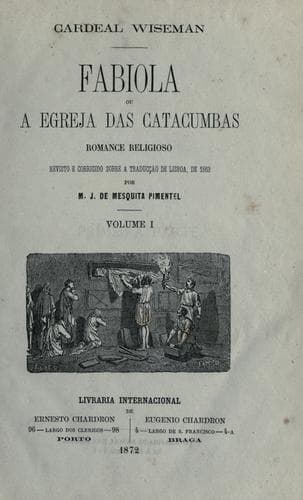
The Mamertine prison is composed of two square subterranean chambers,
one below the other, with only one round aperture in the centre of each
vault, through which alone light, air, food, furniture, and men could
pass. When the upper story was full, we may imagine how much of the two
first could reach the lower. No other means of ventilation, drainage, or
access could exist. The walls, of large stone blocks, had, or rather
have, rings fastened into them for securing the prisoners; but many used
to be laid on the floor, with their feet fastened in the stocks; and the
ingenious cruelty of the persecutors often increased the discomfort of
the damp stone floor, by strewing with broken potsherds this only bed
allowed to the mangled limbs, and welted backs, of the tortured
Christians. Hence we have in Africa a company of martyrs, headed by SS.
Saturninus and Dativus, who all perished through their sufferings in
prison. And the acts of the Lyonese martyrs inform us that many
new-comers expired in the jail, killed by severities, before their
bodies had endured any torments; while, on the contrary, some who
returned to it so cruelly tortured that their recovery appeared
hopeless, without any medical or other assistance, there regained their
health.[164] At the same time the Christians bought access to these
abodes of pain, but not of sorrow, and furnished whatever could, under
such circumstances, relieve the sufferings and increase the comforts,
temporal and spiritual, of these most cherished and venerated of their
brethren.
Roman justice required at least the outward forms of trial, and hence
the Christian captives were led from their dungeons before the tribunal;
where they were subjected to an interrogatory, of which most precious
examples have been preserved in the proconsular Acts of Martyrs, just as
they were entered by the secretary or registrar of the court.
When the Bishop of Lyons, Pothinus, now in his ninetieth year, was
asked, “Who is the God of the Christians?” he replied, with simple
dignity, “If thou shalt be worthy, thou shalt know.”[165] Sometimes the
judge would enter into a discussion with his prisoner, and necessarily
get the worst of it; though the latter would seldom go further with him
than simply reiterating his plain profession of the Christian faith.
Often, as in the case of one Ptolomæus, beautifully recited by St.
Justin, and in that of St. Perpetua, he was content to ask the simple
question, Art thou a Christian? and upon an affirmative reply, proceeded
to pronounce capital sentence.
Pancratius and his companion stood before the judge; for it wanted only
three days to the _munus_, or games, at which they were to “fight with
wild beasts.”
“What art thou?” he asked of one.
“I am a Christian, by the help of God,” was the rejoinder.
“And who art thou?” said the prefect to Rusticus.
Public-domain text, read in full here on John Shaqi.
Reviews
Reviews
No reviews yet
Be the first to share your thoughts on this work.
Elsewhere in the archive
Join the Discussion
Join the discussion
Sign in to leave a comment or review.
Sign InorCreate an account