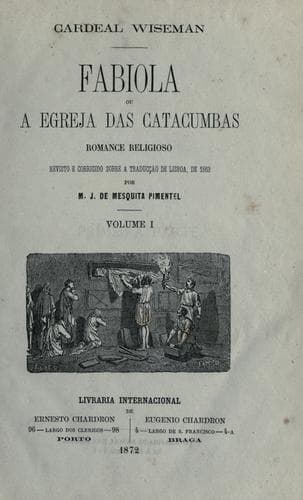
Fabiola; Or, The Church of the CatacombsWiseman, Nicholas Patrick
HistoryHistory
Fabiola; Or, The Church of the Catacombs
Wiseman, Nicholas Patrick
Christian fiction; Church history -- Primitive and early church, ca. 30-600 -- Fiction; Historical fiction
Sebastian, with his calm but energetic manner, now addressed the
intruder, who quailed beneath his look, “Fulvius, what do you here? what
business has brought you?”
“I suppose,” answered he, regaining courage, “that having met the lady
of the house at the same place with you, her noble cousin’s table, I
have a right to wait upon her, in common with other voluntary clients.”
“But not at so unreasonable an hour as this, I presume?”
“The hour that is not unreasonable for a young officer,” retorted
Fulvius insolently, “is not, I trust, so for a civilian.”
Sebastian had to use all his power of self-control to check his
indignation, as he replied:
“Fulvius, be not rash in what you say; but remember that two persons may
be on a very different footing in a house. Yet not even the longest
familiarity, still less a one dinner’s acquaintance, can authorize or
justify the audacity of your bearing towards the young mistress of this
house, a few moments ago.”
“Oh, you are jealous, I suppose, brave captain!” replied Fulvius, with
his most refined sarcastic tone. “Report says that you are the
acceptable, if not accepted, candidate for Fabiola’s hand. She is now in
the country; and, no doubt, you wish to make sure for yourself of the
fortune of one or the other of Rome’s richest heiresses. There is
nothing like having two strings to one’s bow.”
This coarse and bitter sarcasm wounded the noble officer’s best feelings
to the quick; and had he not long before disciplined himself to
Christian meekness, his blood would have proved too powerful for his
reason.
“It is not good for either of us, Fulvius, that you remain longer here.
The courteous dismissal of the noble lady whom you have insulted has not
sufficed; I must be the ruder executor of her command.” Saying this, he
took the unbidden guest’s arm in his powerful grasp, and conducted him
to the door. When he had put him outside, still holding him fast, he
added: “Go now, Fulvius, in peace; and remember that you have this day
made yourself amenable to the laws of the state by this unworthy
conduct. I will spare you, if you know how to keep your own counsel;
but it is well that you should know, that I am acquainted with your
occupation in Rome; and that I hold this morning’s insolence over your
head, as a security that you will follow it discreetly. Now, again I
say, go in peace.”
Public-domain text, read in full here on John Shaqi.
Reviews
Reviews
No reviews yet
Be the first to share your thoughts on this work.
Elsewhere in the archive
Join the Discussion
Join the discussion
Sign in to leave a comment or review.
Sign InorCreate an account