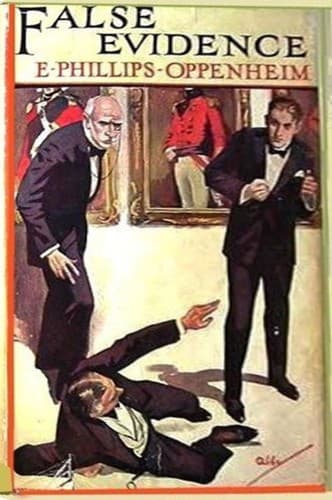
False EvidenceOppenheim, E. Phillips (Edward Phillips)
General
False Evidence
Oppenheim, E. Phillips (Edward Phillips)
Soldiers -- Fiction
The battle was over, and it was morning. Far away in the east a dull
red light had arisen from over the tops of the towering black
mountains, and an angry sun was sullenly shining on the scene of
carnage. It was a low hillside, once pleasant enough to look upon, but
at that moment probably the most hideous sight which the whole universe
could have shown. The silvery streams, which had trickled lazily down
to the valley below, now ran thick and red with blood. The luxuriant
shrubs and high waving ferns were trampled down and disfigured, and,
most horrible sight of all, everywhere were strewn the copper-coloured
forms of the beaten natives. There they lay apart and in heaps in all
imaginable postures, and with all imaginable expressions on their hard,
battered faces. Some lay on their sides with their fingers locked
around their spears, and the rigid frown and convulsed passion of an
undying hatred branded on their numbed features. Others less brave had
been shot in the back whilst flying from the death-dealing fire of the
European guns, and lay stretched about in attitudes which in life would
have been comical, but in death were grotesquely hideous; and over the
sloping fields the misty clouds of smoke still lingered and curled
upwards from the battered extinct shells which lay thick on the ground.
High above the scene of devastation, on a rocky tableau at the summit
of the range of hills, were pitched the tents of the victors. A little
apart from these, conspicuous by the flag which floated above it, were
the general's quarters; and underneath that sloping roof of canvas a
strange scene was being enacted.
Seated amongst a little group of the superior officers, with a heavy
frown on his stern face, sat the general. Before him, at a little
distance, with a soldier on either side, stood a tall, slight young
man, in the uniform of an officer, but swordless. His smooth face, as
yet beardless, was dyed with a deep flush, which might well be there,
whether it proceeded from shame or indignation. For he was under
arrest, and charged with a crime which, in a soldier, is heinous
indeed--it was cowardice.
It was a court-martial before which he stood arraigned, although a
hastily improvised one. But soldiers have prompt ideas of justice, and
General Luxton was a martinet in all matters of discipline.
Disciplinarian though he was, however, he liked little the task which
was now before him.
He looked up from the papers, which were stretched out on the rickety
little round table, with a sudden movement, and bent his frowning gaze
upon the accused. The young man returned his gaze steadily, but the
colour in his cheeks grew deeper.
"Herbert Devereux, you stand accused of a crime which, in your
profession, nothing can palliate or excuse. Have you anything to say
for yourself?"
Public-domain text, read in full here on John Shaqi.
Reviews
Reviews
No reviews yet
Be the first to share your thoughts on this work.
Join the Discussion
Join the discussion
Sign in to leave a comment or review.
Sign InorCreate an account