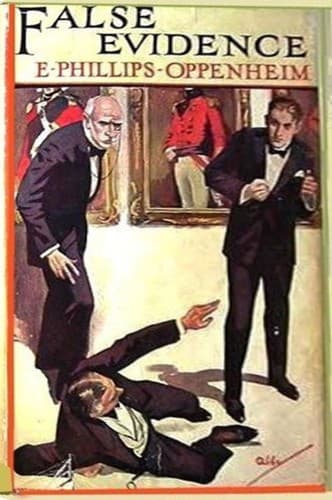
False EvidenceOppenheim, E. Phillips (Edward Phillips)
General
False Evidence
Oppenheim, E. Phillips (Edward Phillips)
Soldiers -- Fiction
Scathing and vibrating with scorn though the words were, they seemed to
touch a chord in the boy's heart, not of humiliation, but of righteous
anger. He sprang to his feet, and held himself for a moment as proudly
as any of his armoured ancestors who looked down from the walls upon
father and son.
"I will go, then," he cried, firmly. "It is right that I should go.
But, after all, it is false to say that I have disgraced your name. It
is Rupert who has done this."
He turned and walked steadily away, without a backward glance. Out of
the swing doors on to the broad staircase, he passed along noble
corridors, between rows of marble statues, down into the mighty
dome-like hall, and out of the house which he had loved so well. And
the servants, who would have pressed forward to welcome him, hung back
in fear, for there was that in his face which they shrunk from looking
upon. Out into the soft summer night he stepped, heedless of their
wondering glances, and down the broad avenue he hurried, never pausing
once to breathe in the balmy night wind, heavy with the odour of
sweet-smelling flowers, or to listen to the nightingale singing in the
low copse which bordered the gardens. Through a low iron gate he
stepped into the park, and walked swiftly along, never glancing to the
right or to the left at the strange shadows cast by the mighty
oak-trees on the velvety turf, or at the startled deer, who sprung up
on every side of him and bounded gracefully away, or at the rabbits who
were scampering about all around in desperate alarm; once he had loved
to watch and to listen to all these things; but now he felt only a
burning desire to escape from them, and to find himself outside the
confines of the home which he was leaving for ever. And not until he
had reached the last paling, and had vaulted into the broad, white
road, did his strength desert him. Then, faint and weary, and
heartsick, he sank down in a heap on the roadside, and prayed that he
might die.
* * * * *
A cloudless summer morning, with the freshness of dawn still lingering
in the air. A morning which seemed about to herald in one of Nature's
perfect days, on which to be sad were a crime, and to have troubles
absurd. Already the dreamy humming of bees was floating in the
atmosphere, and the lark had given place to noisier, if less musical,
songsters. It was a glorious morning.
Over the low, iron gate of an old-fashioned garden a girl was leaning,
her head resting lightly upon her hand, gazing across the pleasant
meadows to the dark woods beyond, with a soft, far-away look in her
grey eyes--for she was thinking of her lover. She was dressed in a
blue print gown, which hung in simple folds around her straight, slim
figure, and she had carelessly passed the long stalk of a full-blown
red rose within her waistband. It was a very pleasant view that she
was admiring; but any casual spectator would have declared that she was
the most charming object in it.
Public-domain text, read in full here on John Shaqi.
Reviews
Reviews
No reviews yet
Be the first to share your thoughts on this work.
Join the Discussion
Join the discussion
Sign in to leave a comment or review.
Sign InorCreate an account