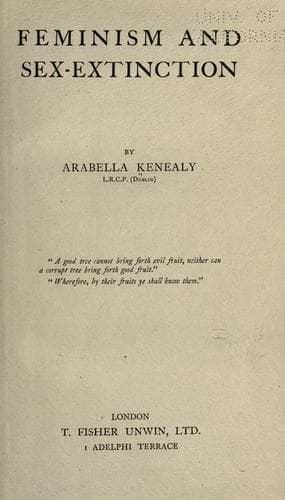
Feminism; Women; Women -- Social and moral questions; Women -- Social conditions
Not woman, Generatrix of Humanity and inspiration of all that is fairest
in Humanity, has been now honoured--but woman the bus-conductor,
ticket-clipper, clerk and agricultural labourer, woman in breeches and
workman's overall, woman whom German frightfulness had dislocated for a
space from her high lot and labours; twisting her powers awry to fit a
hideous revulsion of barbarism.
How, if the gods ever laugh at the fantastic tricks of poor mankind,
they must now have laughed (or wept) over the opportunity that one sex
had--and forfeited--to requite the other's finest merit.
How deeply-moving and far-reaching in its impulse and its inspiration
would have been the tribute, had it been made in reverent gratitude to
the mothers-of-men who had saved the world by mothering the men who
saved the Empire--For achievement stamped with the high and unique
quality of service that woman alone could have rendered. And not
because, when tested by men's standards, she proved herself a worthy
second-best in doing things that men have always done.
The gods must long have wept, I think, that men had thought so lightly
of the women living every day beside them, surrendering their lives and
powers, their interests, desires and individuation; toiling over
cooking-pans and wash-tubs, tied for years to children's cots, for life
to some or another person's sick-bed; smothering talents, impulse,
hopes, impatiences, to find the soft and simple word; solacing,
inspiring, making-believe above an aching spirit and a breaking heart
that all was fair and well with the world. And, moreover, in every
generation making these beautiful fictions ever a fraction more truth
and less fiction. For the gods alone know how that kindlier, purer and
more tender Home-environment which women have created in men's
stony-hearted cities involves the most laborious, heart-wearing, complex
and widest exercise of faculty of any human task.
Women themselves had long been tiring of it; stung to the soul and
mortified by centuries of man's ingratitude--when not contempt.
Nevertheless, where love and duty did not, chains of custom and
tradition bound them faithful to their oars.
Till German Frightfulness releasing them, the cry is now:
Since you can do something better and more profitable than merely to row
the old Galley of Life--since you can do men's work, forsooth, come out
into the market-place and help us pay our big War-Bill!
And yet--Whither will drift the Galley of Life when its rowers put their
strength elsewhere?
II
In the haze of false sentiment exaggerating--not the value of masculine
work done by the sex during War, because this was, of course, invaluable
and indispensable, but exaggerating, absolutely, the values of this work
as compared with the woman's work it had been doing previously, the
decision to admit women to Parliament was a precipitate and an
ill-considered measure, by no means innocent of party motive.
Public-domain text, read in full here on John Shaqi.
Reviews
Reviews
No reviews yet
Be the first to share your thoughts on this work.
Elsewhere in the archive
Join the Discussion
Join the discussion
Sign in to leave a comment or review.
Sign InorCreate an account