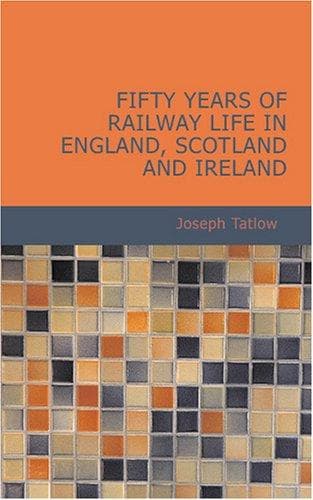
Fifty Years of Railway Life in England, Scotland and IrelandTatlow, Joseph
History
Fifty Years of Railway Life in England, Scotland and Ireland
Tatlow, Joseph
Railroads -- Great Britain -- History
In my schooldays, country walks, pursued as far as health and strength
allowed, were my greatest pleasure, sometimes taken alone, sometimes with
a companion. The quiet valley of the Trent at Repton, Anchor Church,
Knoll Hills, the long bridge at Swarkestone, the charming little country
town of Melbourne, the wooded beauties of Duffield and Belper, the ozier
beds of Spondon; how often have I trod their fields, their woods, their
lanes, their paths; and how pleasantly the memory of it all comes back to
me now!
In those days fashions and manners differed greatly from those of to-day.
Ladies wore the crinoline (successor to the hoop of earlier times),
chignons and other absurdities, but had not ventured upon short skirts or
cigarettes. They were much given to blushing, now a lost art; and to
swooning, a thing of the past; the "vapours" of the eighteenth century
had, happily, vanished for ever; but athletic exercises, such as girls
enjoy to-day, were then undreamed of. Why has the pretty art of blushing
gone? One now never sees a blush to mantle on the cheek of beauty. Does
the blood of feminine youth flow steadier than it did, or has the more
unrestrained intercourse of the sexes banished the sweet consciousness
that so often brought the crimson to a maiden's face? The manners of
maidens had more of reserve and formality then. The off-hand style, the
nod of the head, the casual "how d'ye do," were unknown. Woman has not
now the same desire to appear always graceful; she adopts a manly gait,
talks louder, plays hockey, rides horseback astride, and boldly enters
hotel smoking rooms and railway smoking compartments without apology.
When walking with a lady, old or young, in those days, the gentleman
would offer his arm and she would take it. The curtsey was still
observed but gradually disappearing. When about nineteen years of age, I
remember being introduced to one of the young beauties of the town, who I
had long secretly admired. She made me a profound and graceful
curtsey--feminine homage to my budding manhood. The first curtsey I
remember receiving, except of course in the stately ceremonies of the
dance. For many a day afterwards my cheek glowed with pleasure at the
recollection of that sweet obeisance. She became my sweetheart,
temporarily; but a born butterfly, she soon fluttered away, leaving me
disconsolate--_for a time_!
Women then wrote a sloping hand, delicate penmanship, to distinguish them
from men; crossed and re-crossed their letters, and were greatly addicted
to postscripts.
The men? Well, they wore mutton chop whiskers, or, if Nature was
bountiful, affected the Dundreary style, which gave a man great
distinction, and, if allied to good looks, made him perfectly
irresistible. They wore "Champagne Charley" coats, fancy waistcoats,
frilled-fronted shirts, relic of the lace and ruffles of Elizabeth's
days; velvet smoking caps, embroidered slippers, elastic-side boots and
chimney pot hats.
Public-domain text, read in full here on John Shaqi.
Reviews
Reviews
No reviews yet
Be the first to share your thoughts on this work.
Join the Discussion
Join the discussion
Sign in to leave a comment or review.
Sign InorCreate an account