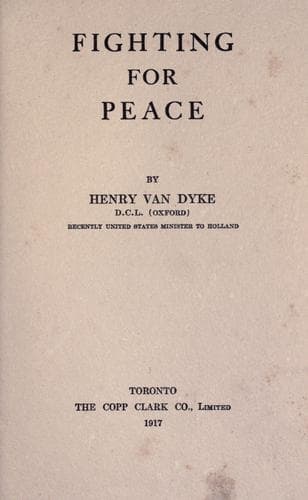
World War, 1914-1918 -- Germany; World War, 1914-1918 -- Personal narratives
But in 1914, when the matter came into my hands, the lapse of time and
the negligence of the nations (the United States included) had made it
too late to fulfil both of these recommendations. If one was carried out
the other must be modified or disregarded. The then Secretary of State,
Mr. Bryan, instructed me to endeavor to have the conference called in
1915, that is, within the period of eight years. After careful
investigation and earnest effort, I reported that it could not be done
at that date. The first thing was to get the preparatory committee,
which would require at least two years for its formation and work.
Toward this point, then, with the approval of the President, I steered
and rowed hard, receiving the warmest sympathy and most effective
co-operation from Jonkheer Loudon, the Netherlands Minister of Foreign
Affairs. Indeed the entire Dutch Government, with the Queen at the head,
were favorable. Holland naturally likes to have the peace conferences at
The Hague. They add to the dignity of the country. The honor is
well-deserved, for Holland may fairly be called the fountainhead of
modern international law, and has produced many of its best expounders,
from Grotius and Bynkershoek to Asser. Moreover, as a side
consideration, these meetings bring a multitude of visitors to the
country, some famous and many profitable, and this is not bad for
business. So the movement is generally popular.
My own particular suggestion toward getting the required "preparatory
committee" seemed to its author to have the double advantage of
practical speed and representative quality. It was to make use, at least
for the first steps, of a body already in existence and in which all the
nations were represented. But there is no need of describing it,
because it did not go through. I was not so much stuck upon it that any
other fair and speedy plan would not have received my hearty backing.
But the trouble was that, push as hard as we would, there was no plan
that would move beyond a certain point. There it stood still. Washington
and The Hague were earnest and enthusiastic. St. Petersburg was warmly
interested, but showed a strong preference for its own plan, and a sense
of its right to a leading place as the proposer of the first conference.
London and Paris seemed favorable to the general idea, and took an
expectant attitude toward any proposal of organization that would be on
the level and fair for everybody. Berlin was singularly reserved and
vague. It said little or nothing. It did not seem to care about the
matter.
Public-domain text, read in full here on John Shaqi.
Reviews
Reviews
No reviews yet
Be the first to share your thoughts on this work.
Join the Discussion
Join the discussion
Sign in to leave a comment or review.
Sign InorCreate an account