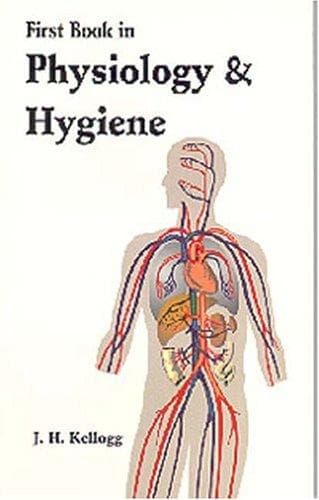
First Book in Physiology and HygieneKellogg, John Harvey
General
First Book in Physiology and Hygiene
Kellogg, John Harvey
Health -- Juvenile literature; Human physiology -- Juvenile literature; Hygiene -- Juvenile literature
7. The blood found in the arteries is red; that in the veins is dark
blue or purple.
8. The color of the blood changes from red to blue in going through the
capillaries. The change is due to the loss of oxygen.
9. In the circulation of the lungs, the blood in the arteries is blue,
that in the veins, red.
10. The change from blue to red takes place while the blood is passing
through the capillaries of the lungs. The change is due to the oxygen
which the corpuscles of the blood take up in the lungs.
11. The pulse is caused by the beating of the heart.
12. The heart does a great deal of work every day in forcing the blood
into different parts of the body.
13. Some of the white blood corpuscles escape from the blood-vessels
through the thin walls of the capillaries.
14. These corpuscles return to the heart through small vessels called
lymph channels or lymphatics.
15. The lymphatics in many parts of the body run into small roundish
bodies called lymphatic glands.
16. The object of the lymphatics is to remove from the tissues and
return to the general circulation the lymph and white blood corpuscles
which escape through the walls of the capillaries.
CHAPTER XII.
HOW TO KEEP THE HEART AND THE BLOOD HEALTHY.
~1.~ The heart is one of the most important of all the organs of the
body. If we take good care of it, it will do good service for us during
a long life. Let us notice some ways in which the heart is likely to be
injured.
~2. Violent Exercise.~--Did you ever run so hard that you were out of
breath? Do you know why you had to breathe so fast? It was because the
violent exercise made your heart beat so rapidly that the blood could
not get out of the lungs as fast as the heart forced it in. The lungs
became so filled with blood that they could not do their work well.
Sometimes, when a person runs very fast or takes any kind of violent
exercise, the lungs become so filled with blood that a blood-vessel is
broken. The person may then bleed to death. It is very unwise to overtax
the heart in any way, for it may be strained or otherwise injured, so
that it can never again do its work properly.
~3. Effects of Bad Air.~--Bad air is very harmful to the heart and to
the blood also. We should always remember that the blood of the body
while passing through the lungs is exposed to the air which we breathe.
If the air is impure, the blood will be poisoned. In churches and in
other places where the air becomes foul, people often faint from the
effects of the impure air upon the heart. It is important that the air
of the rooms in which we live and sleep should be kept very pure by good
ventilation.
~4. Effects of Bad Food.~--The blood is made from what we eat, and if we
eat impure and unwholesome food, the blood becomes impure. We ought to
avoid the use of rich or highly-seasoned foods, candies, and all foods
which are not nutritious. They not only injure the blood by making it
impure, but they cause poor digestion.
Public-domain text, read in full here on John Shaqi.
Reviews
Reviews
No reviews yet
Be the first to share your thoughts on this work.
Join the Discussion
Join the discussion
Sign in to leave a comment or review.
Sign InorCreate an account