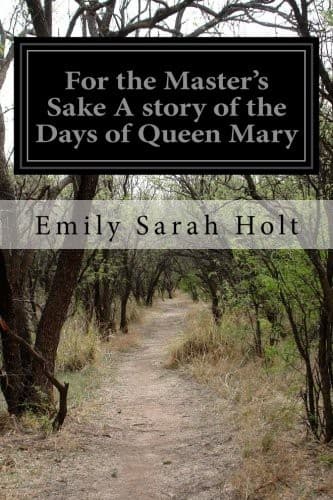
For the Master's Sake: A Story of the Days of Queen Mary — John Shaqi
For the Master's Sake: A Story of the Days of Queen MaryHolt, Emily Sarah
History
For the Master's Sake: A Story of the Days of Queen Mary
Holt, Emily Sarah
Counter-Reformation -- England -- Fiction; England -- Social life and customs -- 16th century -- Fiction; Historical fiction
The hall of the Bishop's Palace was crowded that morning. The six
prisoners were led out in order, according to their social rank:--first,
William Hunter, the apprentice-boy of Brentford, only sixteen years of
age; then Thomas Tomkins, the weaver; Stephen Knight, the barber of
Maldon; William Pygot, the butcher of Braintree; John Laurence, the
Black Friar; lastly, Thomas Hawkes, the only one in the group who wrote
himself "gentleman." They were such common, contemptible people, that
Gardiner thought them beneath his august notice, and scornfully referred
them to Bonner's jurisdiction. They were marched at once to the
Consistory sitting in Saint Paul's Chapter-House, whither the crowd
followed.
The Consistory demanded of the accused persons--
"Do ye believe that the body of Christ is in the Sacrament, without any
substance of bread and wine remaining?"
The prisoners replied that this doctrine was not agreeable to Scripture.
"Do ye believe that your parents, your sponsors, the King, Queen,
nobility, clergy, and laity of the realm, believing this doctrine, were
true and faithful Christians, or no?"
"If they so believed," was the answer, "they were therein deceived."
"Did ye, yourselves, in time past, truly believe the same, or no?"
They said, "Ay, heretofore; but not now."
"Do ye believe that the Spirit of Christ has been, is, and will be, with
the Church, not suffering her to be deceived?"
"We do so believe," replied the prisoners.
"Have you," pursued Bonner, "being infamed to me as heretics, not been a
good space in my house, and been there fed, and instructed by those
desirous of your soul's welfare--and yet you refuse this belief?"
The accused admitted all this.
"Will ye now conform?"
"In no whit, until it be proved by Holy Scripture," came the decisive
answer.
"If not," demanded the Bishop, "what grounds have you to maintain your
opinion? Who is of the same opinion? What conference have ye had
therein with any? What comfort and relief had you from any, and their
names and dwelling-places?" [Note 1.]
This was a deliberate request that they would accuse their friends and
teachers. But the prisoners did not respond.
"We have no ground but the truth," they said, "which we were taught by
Doctor Taylor, of Hadleigh, and such other."
Since Taylor of Hadleigh was already burnt to ashes, this admission
could do him no harm.
The accused persons were then remanded until nine o'clock the next
morning, and advised in the meantime to "bethink them what they would
do."
It was Cicely Marvell who told all this in a low voice to Agnes Stone,
as they stood together under a tree in the meadow behind Cow Lane.
"Keep a good heart, dear maid!" said Cicely encouragingly. "May be it
shall be better than we might fear. `The Lord is very pitiful, and of
tender mercy.'"
Public-domain text, read in full here on John Shaqi.
Reviews
Reviews
No reviews yet
Be the first to share your thoughts on this work.
Join the Discussion
Join the discussion
Sign in to leave a comment or review.
Sign InorCreate an account