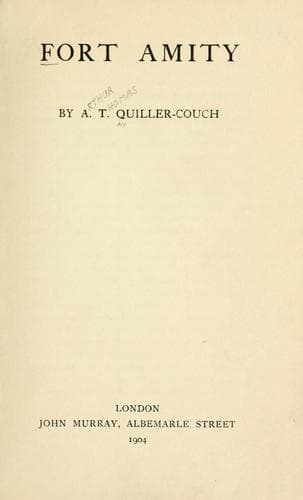
United States -- History -- French and Indian War, 1754-1763 -- Fiction
The scene is known to-day for one of the fairest in the world.
Populous cities lie near it and pour their holiday-makers upon it
through the summer season. Trains whistle along the shore under its
forests; pleasure-steamers, with music on their decks, shoot across
bays churned of old by the paddles of war-canoes; from wildernesses
where Indians lurked in ambush smile neat hotels, white-walled, with
green shutters and deep verandas; and lovers, wandering among the
hemlocks, happen on a clearing with a few turfed mounds, and seat
themselves on these last ruins of an ancient fort, nor care to
remember even its name. Behind them--behind the Adirondacks and the
Green Mountains--and pushed but a little way back in these hundred
and fifty years, lies the primeval forest, trodden no longer now by
the wasting redman, but untamed yet, almost unhandselled. And still,
as the holidaymakers leave it, winter closes down on the lake-side
and wraps it in silence, broken by the loon's cry or the crash of a
snow-laden tree deep in the forest--the same sounds, the same aching
silence, endured by French and English garrisons watching each other
and the winter through in Fort Carillon or Fort William Henry.
"The world's great age begins anew." . . . It begins anew, and
hourly, wherever hearts are high and youth sets out with bright eyes
to meet his fate. It began anew for Ensign John a Cleeve on this
morning of July 5, 1758; it was sounded up by bugles, shattering the
forest silence; it breathed in the wind of the boat's speed shaking
the silken flag above him. His was one of twelve hundred boats
spreading like brilliant water-fowl across the lake which stretched
for thirty miles ahead, gay with British uniforms, scarlet and gold,
with Highland tartans, with the blue jackets of the Provincials;
flash of oars, innumerable glints of steel, of epaulettes, of belt,
cross-belt and badge; gilt knops and tassels and sheen of flags.
Yonder went Blakeney's 27th Regiment, and yonder the Highlanders of
the Black Watch; Abercromby's 44th, Howe's 55th with their idolised
young commander, the 60th or Royal Americans in two battalions;
Gage's Light Infantry, Bradstreet's axemen and bateau-men, Starke's
rangers; a few friendly Indians--but the great Johnson was hurrying
up with more, maybe with five hundred; in all fifteen thousand men
and over. Never had America seen such an armament; and it went to
take a fort from three thousand Frenchmen.
Public-domain text, read in full here on John Shaqi.
Reviews
Reviews
No reviews yet
Be the first to share your thoughts on this work.
Join the Discussion
Join the discussion
Sign in to leave a comment or review.
Sign InorCreate an account