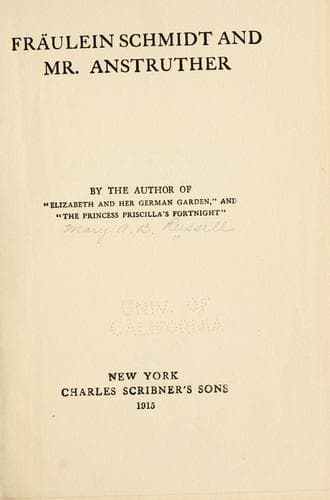
Fräulein Schmidt and Mr. AnstrutherVon Arnim, Elizabeth
General
Fräulein Schmidt and Mr. Anstruther
Von Arnim, Elizabeth
British -- Germany -- Fiction; Epistolary fiction; Germany -- Fiction; Love stories; Young women -- Fiction
more sacred to me; sacred, I suppose, because they were more mysterious,
more distant,--glorious angel-trumpets through which God sent His
messages. I was so glad, I whose tendency is, I am afraid, to laugh and
criticise, to possess one thing at which I could not laugh, to have a
whole tract of beauty in which I could walk seriously, with downcast
eyes; and I thought I was never going to be able to be serious there
again. It was a passing fit, a violent revulsion. If I like carefully to
separate my own soul and body, why should I not do the same with those
of other sinners? It has always seemed to me so quaint the way we admit,
the good nature with which we reiterate, that we are all wretched
sinners. We do it with such an immense complacency. We agree so
heartily, with such comfortable, regretful sighs, when anybody tells us
so; but with only one wretched sinner are we of a real patience. With
him, indeed, our patience is boundless. I know this, I have always known
it, and I will not now, at an age when it is my hope to grow every year
a little better, forget it and be as insolently intolerant as the man
who shudders at the name of Heine, will not read a line of him and calls
him _Schmutzfink_. That writer's books you tell me about, the books the
virtuous in England will not read because his private life was
disgraceful, beautiful books, you say, into which went his best, in
which his spirit showed how bright it was, how he had kept it apart and
clean, I shall get them all and read them all. No sinner, cursed with a
body at variance with his soul and able in spite of it to hear the music
of heaven and give it exquisite expression, shall ever again be
identified by me with what at such great pains he has kept white. I know
at least three German writers to whom the same thing happened, men who
live badly and write nobly. My heart goes out to them. I think of them
lame and handicapped, leading their Muse by the hand with anxious care
so that her shining feet, set among the grass and daisies along the
roadside, shall not be dimmed by the foulness through which they
themselves are splashing. They are caked with impurities, but with the
tenderest watchfulness they keep her clean. She is their gift to the
world, the gift of their best, of their angel, of their share of
divinity. And the respectable, afraid for their respectability, turn
their backs in horror and go and read without blinking ugly things
written by other respectables. Why, no priest at the altar, however
unworthy, can hinder the worshipper from taking away with him as great a
load of blessings as he will carry. And a rose is not less lovely
because its roots are in corruption. And God Himself was found once in a
manger. Thank you, and good-by.
ROSE-MARIE SCHMIDT.
XLVIII
Galgenberg, Oct. 8th.
Public-domain text, read in full here on John Shaqi.
Reviews
Reviews
No reviews yet
Be the first to share your thoughts on this work.
Elsewhere in the archive
Join the Discussion
Join the discussion
Sign in to leave a comment or review.
Sign InorCreate an account