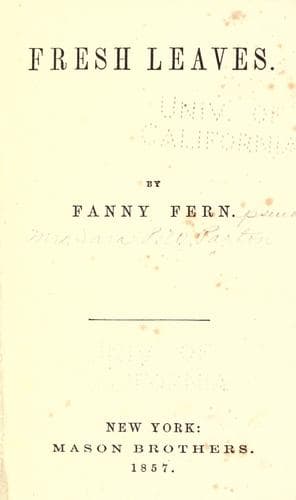
American essays -- 19th century; Short stories, American
“Well, I really don’t know,” said Zekiel, “I never heern tell her
name. She’s a bran new neighbor, and as I was coming into town every day
with my cart, she axed me, civil like, if I’d bring these vests to you.
So, I brung ’em. I don’t mind doing a good turn for a fellow creetur,
now and then, specially when it ’taint no bother,” added Zekiel, with a
grin.
“What did you spoil it for by saying that?” said John Pray. “I was
just going to clap you on the back for a clever fellow.”
“You might go further, and clap a worse fellow on the back,” answered
Zekiel. “But I never boasts, I don’t. ’Tain’t no use. If the ministers
tell the truth, we’ve all got to be weighed in the big scales up above,
where there ain’t no false weights--bad deeds agin good deeds. Farmer
Reed, I’m thinking, will be astonished when the balance on his account
is struck. But, good day; my parsnips and cabbages ought to be in the
market, instead of wilting at your door--even though you city folks
don’t know the taste of a fresh vegetable. Good day.”
CHAPTER XVI.
Rain--rain--rain; patter, patter. No sunshine to help Lucy’s purblind
eyes in stitching the dark vests; no sunshine to kiss open the
buttercups for Fanny. The birds took short and hasty flights from tree
to tree; the farmers slouched their hats over their faces, and whipped
up their teams; the little school children hurried back and forth with
their satchels, without stopping to look for chipmunks or for
ground-birds’ nests; the bells on the baker’s cart lost their usual
merry tinkle, and the old fishman’s horn, as he went his Friday round,
gave forth a discordant, spiritless whine.
Little Fanny had righted her grandmother’s work-basket, read “Jack and
his Bean-Stalk,” made houses on the slate, put the black kitten to sleep
in the old barrel, blown soap bubbles, till she was tired, in the tin
bowl, and had finally crept up on the little cot bed and fallen asleep.
Lucy sat back in her chair, and began counting over the money Zekiel
had brought her. It would relieve their present necessities. Fanny
should have some new clothes out of it, when farmer Smith’s rent was
paid. But the future? Lucy’s eyes were growing dimmer every day, and her
limbs more feeble. She might drop off suddenly, and then who would
befriend poor little Fanny? What lessons of sorrow had that loving
little heart to learn? By what thorny path would she thread life’s
toilsome journey?
Dear little Fanny! She could no more live without love than flowers
without sunshine. That _she_ should ever weep tears, that no kindly hand
should wipe away; that she should hunger or thirst--shiver with winter’s
cold--faint under summer heat; that a harsh voice should ever drive the
blood from her lip or cheek--that her round limbs should bend with
premature toil--that sin should tempt her helplessness--that sorrow
should invite despair--that wrong should ever seem right to Mary’s
child! Poor Lucy bowed her head and wept.
Public-domain text, read in full here on John Shaqi.
Reviews
Reviews
No reviews yet
Be the first to share your thoughts on this work.
Elsewhere in the archive
Join the Discussion
Join the discussion
Sign in to leave a comment or review.
Sign InorCreate an account