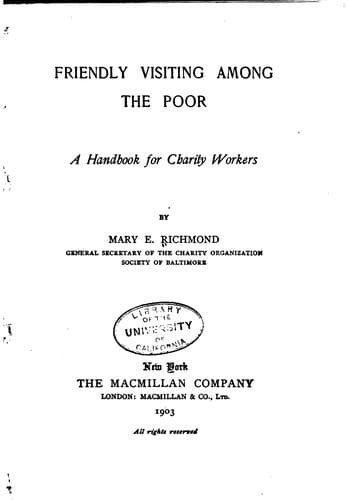
Friendly Visiting among the Poor: A Handbook for Charity WorkersRichmond, Mary Ellen
General
Friendly Visiting among the Poor: A Handbook for Charity Workers
Richmond, Mary Ellen
Friendly visiting
Another and less excusable form of the credit system is buying
household goods on the instalment plan. The poor are often teased into
this by glib agents. An old woman, whose income was not sufficient to
keep her alive, contracted to buy a clock on the instalment plan for
$8.00 because she needed one when she {114} occasionally had a day's
job of cleaning. When her visitor remonstrated that a dollar clock
would have done quite as well, she replied triumphantly, "Yes, but this
one is only 25 cents a week!" When payments cannot be made, and the
purchaser is threatened with the loss of the goods, it is possible to
be too hasty in rushing to the rescue. The Fifteenth Report of the
Boston Associated Charities records such an experience. "A family had
purchased furniture upon the instalment plan, when the husband was
suddenly deprived of his job. The furniture was about to be seized,
when generous sympathizers came to the rescue, and redeemed the
articles. Scarcely had the donors time to realize what a financial
relief they had been able to give to the troubled family before the
same bit of folly was repeated, and 'parlor furniture' was added to the
inventory of goods and chattels to be paid for by the week." [3] When
instalment men threaten seizure, it is well to find out whether they
are acting within the law. They have been known to take advantage of
ignorant clients. But the system {115} itself is bad in that it
encourages the purchase of unnecessary things, and at a great advance
upon cash prices.
When the poor man would borrow, he is often exposed to the impositions
of a class of unscrupulous money lenders, who violate the laws against
usury, but hope to escape punishment or loss through the ignorance of
their customers. The pitiful part of it is that the self-respecting
poor often fall into their traps. A family in pecuniary straits for
the first time is naturally attracted by the specious advertisements of
the chattel-mortgage companies, which offer to lend money on goods that
the borrower keeps in his possession, and promise that all negotiations
shall be strictly confidential. This seems an easy way out of present
difficulties without loss of self-respect or any painful publicity.
But the terms of the contract are far from easy in reality. Through a
system of bonuses, extra fees, or monthly payments for "guaranteeing"
the loan, interest amounting to from 100 per cent to 200 per cent a
year is wrung from the borrowers. Bled dry at last, and unable to pay
{116} such extortionate interest and the principal too, their goods are
seized, and the members of the household become objects of charity.
Whereever these chattel-mortgage companies gain any foothold, many of
their victims are applicants for relief. The law usually furnishes
ample protection, but the companies flourish through the poor man's
ignorance of the law.
Public-domain text, read in full here on John Shaqi.
Reviews
Reviews
No reviews yet
Be the first to share your thoughts on this work.
Elsewhere in the archive
Join the Discussion
Join the discussion
Sign in to leave a comment or review.
Sign InorCreate an account