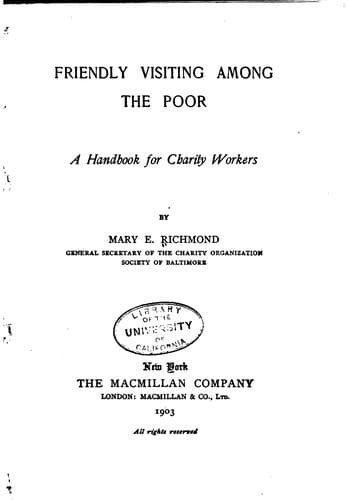
Friendly Visiting among the Poor: A Handbook for Charity WorkersRichmond, Mary Ellen
General
Friendly Visiting among the Poor: A Handbook for Charity Workers
Richmond, Mary Ellen
Friendly visiting
As soon as a visitor learns that the goods of a poor family are
mortgaged, he should, at once, whether the company is pressing for
payment or not, learn the terms of the contract, and get an opinion as
to its validity from some friend who is a lawyer. The usual form of
contract in Maryland is a six months' mortgage, bearing 6 per cent
interest, with the legal charge for recording deducted from the amount
advanced to the borrower. But, in addition to this, notes for from
$2.00 upward, according to the size of the loan, are made payable
monthly to some third party who is supposed to guarantee the loan.
Lawyers advise no payments on these notes, and that principal and legal
interest be offered at the expiration of the mortgage. If this offer
{117} is refused, the company renders itself liable to damage
proceedings in seizing the furniture. In each case, however, it is
better to have a lawyer's advice, as the contracts vary, and ignorant
men, who thought they were signing a six months' mortgage, have been
known to sign a one month's mortgage instead.
The law against usury can protect those who know enough to apply it,
but the poor man remains unprovided with any satisfactory means of
negotiating a loan. The legal rate of interest is too low to make
loans on chattels profitable. The organization, by public-spirited
business men, of companies that will be careful in taking risks, and
will secure special legislation enabling them to charge not more than a
reasonable rate of interest, is the only remedy. Companies like these
have been organized successfully in Boston and Buffalo by
philanthropists who were also business men and wise enough to realize
the importance of placing such loan agencies on an equitable business
basis. Several advantages are apparent from the working of these
equitable loan companies. Those who cannot {118} properly negotiate a
loan are discouraged from applying, because the loans are made with
great care. Those who get the loans are fairly dealt with, and are
helped at the right time in a way that saves them from becoming
applicants for charity. Best of all, the other loan companies are
forced to reduce their rate of interest, and offer fairer terms.
The habit of pawning goods has never become general among our native
population, but among the foreign poor of our large cities it is the
common practice; and here, too, the philanthropic pawnshop, started at
the instance of the New York Charity Organization Society, has reduced
the percentage charged by other pawnshops in New York.
Public-domain text, read in full here on John Shaqi.
Reviews
Reviews
No reviews yet
Be the first to share your thoughts on this work.
Elsewhere in the archive
Join the Discussion
Join the discussion
Sign in to leave a comment or review.
Sign InorCreate an account