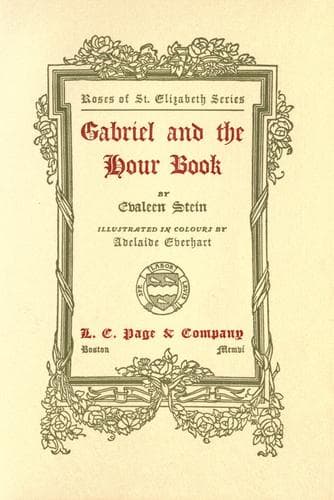
France -- History -- 15th century -- Juvenile fiction; Illumination of books and manuscripts -- Juvenile fiction
And then, by and by, Gabriel would go home through the perfumed dark,
feeling vaguely happy; for all the while, through those pleasant
evenings with Brother Stephen, his mind and heart were opening brightly
as the yellow primroses, that blossomed by moonlight over all the Abbey
meadows.
CHAPTER V.
THE COUNT'S TAX
AND in this happy manner the spring and summer wore away and the autumn
came. Brother Stephen felt very cheerful, for the beautiful book grew
more beautiful week by week; and he was very proud and happy, because he
knew it was the loveliest thing he had ever made.
Indeed, he himself was so cheerful, that as the autumn days, one after
another, melted away, it was some little time before he noticed that
Gabriel was losing his merriness, and that he had begun to look sad and
distressed. And finally, one morning, he came looking so very unhappy,
that Brother Stephen asked, with much concern:
"Why, lad, whither have all thy gay spirits taken flight? Art thou ill?"
"Nay, sir," answered Gabriel, sadly; "but oh, Brother Stephen, we are in
so much trouble at home!"
At this the monk at once began to question him, and learned that
Gabriel's family were indeed in great misfortune.
And this is how it came about: in those days the peasant folk had a very
hard time indeed. All of the land through the country was owned by the
great nobles; and the poor peasants, who lived on the little farms into
which the land was divided, had few rights. They could not even move to
another place if they so wished, but were obliged to spend all their
lives under the control of whatever nobleman happened to own the estate
on which they were born.
They lived in little thatched cottages, and cultivated their bits of
land; and as rent for this, each peasant was obliged to help support the
great lord who owned everything, and who always lived in a strong
castle, with armed men under his command.
The peasants had to raise wheat and vegetables and sheep and cows, so
that the people of the castles might eat nice, white bread, and nut
cookies and roast meat; though the poor peasants themselves had to be
content, day after day, with little more than hard, black bread, and
perhaps a single bowl of cabbage or potato soup, from which the whole
family would dip with their wooden spoons.
Then, too, the peasants oftentimes had to pay taxes when their noble
lord wished to raise money, and even to follow him to war if he so
commanded, though this did not often happen.
And now we come to the reason for Gabriel's troubles. It seems that the
Count Pierre de Bouchage, to whose estate Gabriel's family belonged,
had got into a quarrel with a certain baron who lived near the town of
Evreux, and Count Pierre was determined to take his followers and attack
the baron's castle; for these private wars were very common in those
days.
Public-domain text, read in full here on John Shaqi.
Reviews
Reviews
No reviews yet
Be the first to share your thoughts on this work.
Join the Discussion
Join the discussion
Sign in to leave a comment or review.
Sign InorCreate an account