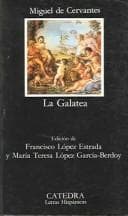
Spanish fiction -- Translations into English; Spanish poetry -- Translations into English
distress, set between the waters and the apple-tree, than that which
the wretched lover feels placed between fear and hope? The services
of the lover out of favour are the pitchers of Danaus's daughters,
drained so fruitlessly that they never come to attain the least part of
their purpose. Is there eagle that so destroys the bowels of Tityus as
jealousy destroys and gnaws those of the jealous lover? Is there rock
that weighs down so much the shoulders of Sisyphus as love unceasingly
weighs down the thoughts of those in love? Is there wheel of Ixion
that more quickly turns and torments than the quick varying fancies of
irresolute lovers? Is there a Minos or Rhadamanthus who so punishes and
oppresses the luckless condemned souls as love punishes and oppresses
the loving breast which is subject to his unendurable power? There is
not a cruel Megæra, nor raging Tisiphone, nor avenging Alecto, who so
illtreat the soul in which they enclose themselves, as this fury, this
desire, illtreats those hapless ones who recognise it as lord, and bow
before it as vassals, who, to give some excuse for the follies they
commit, say--or at least the ancient heathens said--that that instinct
which incites and moves the lover to love another's life more than his
own, was a god, to whom they gave the name of Cupid, and so, being
constrained by his godhead, they could not fail to follow and go after
what he willed. They were moved to say this, and to give the name of
god to this desire by seeing the supernatural effects it produces in
lovers. Without doubt it seems a supernatural thing for a lover at
the same moment to be timorous and confident, to burn away from his
beloved and grow cold when nearer her, to be dumb when speaking much,
and speaking much when dumb. It is likewise a strange thing to follow
one who shuns me, to praise one who reproaches me, to utter words to
one who does not listen to me, to serve an ungrateful one, and to hope
in one who never promises nor can give aught that is good. Oh bitter
sweetness, oh poisonous medicine of sick lovers, oh sad joy, oh flower
of love, that dost indicate no fruit, save that of tardy repentance!
These are the effects of this fancied god, these are his deeds and
wondrous works; and indeed it can also be seen in the picture by which
they represented this vain god of theirs, how vainly they acted; they
painted him as a boy, naked, winged, his eyes bandaged, with bow and
arrows in his hands, to give us to understand, amongst other things,
that, when a man is in love, he assumes again the character of a simple
and capricious boy, who is blind in his aims, light in his thoughts,
cruel in his deeds, naked and poor in the riches of the understanding.
They said likewise that amongst his arrows he had two, the one of lead
and the other of gold, with which he produced different effects; for
the leaden one begot hatred in the breasts it touched, and the golden
one increase of love in those it wounded, merely to tell us that it
Public-domain text, read in full here on John Shaqi.
Reviews
Reviews
No reviews yet
Be the first to share your thoughts on this work.
Elsewhere in the archive
Join the Discussion
Join the discussion
Sign in to leave a comment or review.
Sign InorCreate an account