Spanish fiction -- Translations into English; Spanish poetry -- Translations into English
It was not till 1830 that the first genuine translation of the
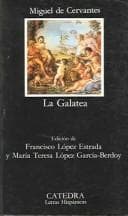
_Galatea_ appeared, and this German version was followed by two others
in the same language. These stood alone till 1867[109] when it occurred
to a droll, strange man named Gordon Willoughby James Gyll (or James
Willoughby Gordon Gill),[110] to publish an English rendering of
Cervantes's pastoral in which, as he thought, "the rural characters
are nicely defined; modesty and grace with simplicity prevailing."
Gyll, who wrongly imagined that he was the first to translate the
_Galatea_, seems to have been specially attracted by Cervantes's
verses,--a compliment which the author would have enjoyed all the more
on learning from his admirer that these "compositions are cast in
lyrics and iambics, without being quite of a dithyrambic character,
furnishing relief to the prose, and evincing the skill and tendency
of the bard in all effusions relative to love, the master-passion of
our existence, without which all would be arid and disappointing to
the eagle spirit of the child of song." After this opening you know
what to expect. And you get it--three hundred and forty-nine pages of
it! Gyll never writes of parts, but of "portions"; rather than leave
a place, he will "evacuate" it; nothing will induce him to return if
he can "revert"; he prefers "scintillations" to gleams, "perturbators"
to disturbers, "cogitation" to thought, and "exculpations" to excuses.
Gyll's English, as may be judged from the specimens just quoted, is
almost as eccentric as the English of Mohindronauth Mookerjee in his
_Memoir of the late Honourable Justice Onoocool Chunder Mookerjee_, and
it is much less amusing. His effrontery is beyond description. He knew
nothing of Cervantes whom he actually believed to be a contemporary
of Floridablanca in the eighteenth century.[111] He almost implies
that he has read Cervantes's lost _Filena_, though he admits that it
"is now rarely found." His ignorance of Spanish is illimitable. How
he can have presumed to translate from it passes all understanding.
He misinterprets the easiest phrases, and he follows the simple plan
of translating each word by the first rough equivalent that he finds
given in some poor dictionary. It would be waste of time to criticize
the inflated prose and detestable verse which combine to make Gyll's
rendering the worst in the world. Two specimens will suffice to show
what Gyll can do when he gives his mind to it. At the very opening
of the First Book, he reveals his powers:--"But the perspicacity
of Galatea detected in the motions of his countenance what Elicio
contained in his soul, and she evinced such condescension that the
words of the enamoured shepherd congealed in his mouth, though it
appeared to him that he had done an injury to her, even to treat of
what might not have the semblance of rectitude." This is Gyll as a
master of prose. Gyll, the lyric poet, is even richer in artistic
surprises.
Public-domain text, read in full here on John Shaqi.
Reviews
Reviews
No reviews yet
Be the first to share your thoughts on this work.
Join the Discussion
Join the discussion
Sign in to leave a comment or review.
Sign InorCreate an account