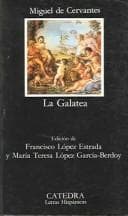
Spanish fiction -- Translations into English; Spanish poetry -- Translations into English
I thought the fire that sets the heart aflame,
Lit by the wingèd boy, the cunning net,
Within whose mesh he doth the gods entame,
The strangling noose, the arrow he doth whet
In frenzied wrath, would wound the peerless dame
As me they wound, who am her slave; and yet
No noose nor fire hath power against a heart
That is of marble made, nor net nor dart.
But lo, 'tis I who burn within the blaze,
I waste away: before the net unseen
I tremble not: my neck I humbly place
Within the noose; and of his arrow keen
I have no fear: thus to this last disgrace
Have I been brought--so great my fall has been
That for my glory and my heart's desire
The dart and net I count, the noose and fire.
Thus on the banks of the Tagus sang Elicio, a shepherd on whom nature
had lavished as many gifts as fortune and love had withheld; though
the course of time, that consumes and renews man's handiwork, had
brought him to such a pass, that he counted for happiness the endless
misfortunes in which he had found himself, and in which his desire
had placed him, for the incomparable beauty of the peerless Galatea,
a shepherdess born on those same banks. Although brought up in
pastoral and rustic exercises, yet was she of so lofty and excellent
an understanding, that gentle ladies, nurtured in royal palaces, and
accustomed to the refined manners of the Court, counted themselves
happy to approach her in discretion as in beauty, by reason of the many
noble gifts with which Heaven had adorned Galatea. She was loved and
desired with earnest passion by many shepherds and herdsmen, who tended
their herds by the banks of the Tagus: amongst whom the gay Elicio made
bold to love her, with a love as pure and honest, as the virtue and
modesty of Galatea allowed. It must not be thought of Galatea that she
despised Elicio, still less that she loved him: for, at times, almost
persuaded, as it were, and overcome by the many services of Elicio, she
with some modest favour would raise him to heaven; and, at other times,
without taking account of this, she would disdain him in such wise,
that the love-sick shepherd scarce knew his lot. The excellencies and
virtues of Elicio were not to be despised, nor were the beauty, grace,
and goodness of Galatea not to be loved. On the one hand, Galatea did
not wholly reject Elicio; on the other, Elicio could not, nor ought
he to, nor did he wish to, forget Galatea. It seemed to Galatea, that
since Elicio loved her with such regard to her honour, it would be too
great an ingratitude not to reward his modest thoughts with some modest
favour. Elicio fancied that since Galatea did not disdain his services,
his desires would have a happy issue; and, whenever these fancies
revived his hope, he found himself so happy and emboldened, that a
Public-domain text, read in full here on John Shaqi.
Reviews
Reviews
No reviews yet
Be the first to share your thoughts on this work.
Elsewhere in the archive
Join the Discussion
Join the discussion
Sign in to leave a comment or review.
Sign InorCreate an account