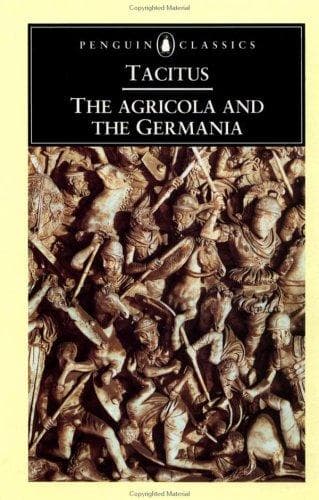
Agricola, Gnaeus Julius, 40-93; Germanic peoples -- Early works to 1800; Statesmen -- Rome -- Biography -- Early works to 1800
_Oblivio obruet_, sc. for want of a historian, carent quia _vate sacro_,
cf. Hor. Od. 4, 9, 25, seq. By _multos veterum_, T. means many ancients
of _real worth_. So _velut_ implies. A. is to be immortalized through his
biographer. This is implied in _narratus et traditus_. Ancient authors
thought it not improper to express a calm consciousness of merit and a
proud confidence of immortality. T. is very modest and delicate in the
manner of intimating his expectations. But the sentiment of these last
words is substantially the same with the line of Horace: Exegi monumentum
aere perennius. The whole peroration of this Biography is one of singular
beauty and moral elevation. Pathetic, yet calm, rich in noble sentiments
and animated by the purest and loftiest spirit, it is a fit topstone to
that monument, in respect to which T. felt so well founded an assurance,
which still _manet mansurumque est in animis hominum, in aeternitate
temporum, fama rerum_. There is scarcely an educated youth in Christendom
who is not as familiar with the name of Agricola, as with that of Aeneas
and Ulysses. And the only reason why we know anything of these heroes, is
the genius of their respective biographers. There had been other
Agricolas before the age of Trajan, as there had been other heroes like
Aeneas, and other wandering sages like Ulysses, before the war of Troy.
But they found no Tacitus, Virgil, and Homer to record their adventurous
and virtuous deeds. It is the prerogative of eminent writers to confer
immortality; and though Alexander would prefer to be Achilles rather than
Homer, we should have known little of his achievements, had he not
encouraged scholars as well as warriors, and rewarded genius no less than
valor.
THE END
End of Project Gutenberg's Germania and Agricola, by Caius Cornelius Tacitus
Public-domain text, read in full here on John Shaqi.
Reviews
Reviews
No reviews yet
Be the first to share your thoughts on this work.
Elsewhere in the archive
Join the Discussion
Join the discussion
Sign in to leave a comment or review.
Sign InorCreate an account