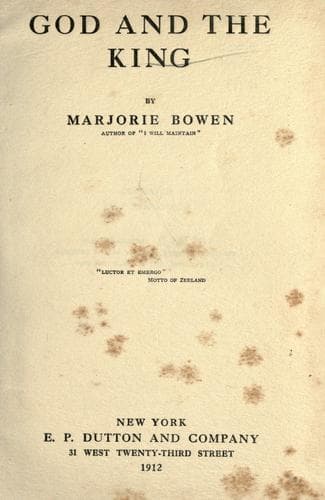
Great Britain -- History -- Revolution of 1688 -- Fiction; James II, King of England, 1633-1701 -- Fiction
Portland, passing the pillared façade of Northumberland House and the
bronze statue of Charles I. on horseback, came into the Mall, past the
tennis-court and archery butts, where several people were practising, to
the pond covered with wild fowl and overshaded with elm and chestnut
that gave a thick green colour to the water. To his right was a row of
handsome houses looking on to the avenue of trees in the Mall, and at
most of the windows people were seated; for it was near the turn of the
afternoon, and a pleasant coolness began to temper the heat of the day.
Portland looked at these people: fashionably dressed women, with lap
dogs or embroidery, drinking tea or talking; easy-looking men smoking or
reading one of the new sheets which had flooded the country since the
lapse of the censorship of the press—all comfortable, well-to-do,
self-satisfied, and rather insolent in their enjoyment of the sunshine,
and the shadow of the trees, and their own comfortable homes.
William Bentinck seated himself on a bench under one of the great elms;
he felt bitter towards these people—towards England; he came near to
hating the country even as they hated him; he had a swift impression
that these lazy, prosperous citizens were the real masters, and he, and
his friends, and the King, little better than slaves.
He looked at the women and recalled the poor Queen, who had had scarce
half an hour’s ease since she had set foot on the quay by the Tower; who
had toiled and kept a brave face and a high heart, and done everything
that duty demanded of her—and for what reward?—to be reviled, abused,
slighted and, finally, to die of one of the hideous diseases the great
city engendered, and be forgotten in the changeable factions that
continued their quarrels even before she was in her grave.
He looked at the men, and thought of the last letter from the King he
carried in his pocket; he saw some of the lines in it as if the paper
was spread before him—"I am in greater distress for money than can well
be imagined. I hope God will help instead of abandoning me; but indeed
it is hard not to lose all courage." It seemed to Portland that
Shrewsbury was right. What was the use of any of it?—what goad kept them
all at their tasks? What was the aim of all this incredible labour,
endeavour, fatigue, courage, and patience?
Did the King endure what he was enduring that these people might make
knots, and drink tea, and sun themselves on the Mall in peace?
Did he, William Bentinck, who was fond of gardening, and a quiet life,
and his own country, spend his life between war and exile, conflict and
distasteful company, that the boys in the tennis-courts might play their
games and laugh and shout as much as they wished?
If it were so, the objects seemed miserable compared to the labour.
But there was something more behind it all; Portland could not put a
name to it; he supposed that one day God would explain.
CHAPTER VII
Public-domain text, read in full here on John Shaqi.
Reviews
Reviews
No reviews yet
Be the first to share your thoughts on this work.
Elsewhere in the archive
Join the Discussion
Join the discussion
Sign in to leave a comment or review.
Sign InorCreate an account