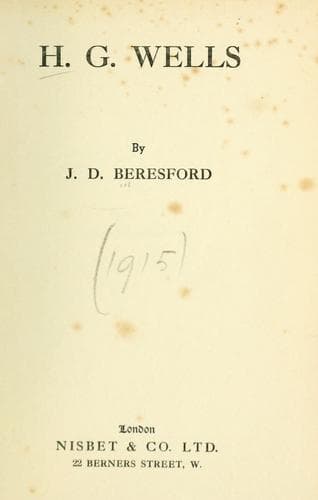
Wells, H. G. (Herbert George), 1866-1946 -- Criticism and interpretation
Mr Wells' essays in sociology are not dry treatises, based on Blue
books and the gathering together of information and statistics from a
formless and largely worthless collection of earlier sources. He has
approached this question of man in relation to the State in the same
generous spirit displayed in his works of fiction; and it is only by
using the word "sociology" in its fuller sense as conceived by Comte,
rather than in the restricted sense of "social science" with its
implication of economics, as narrowed by Herbert Spencer, that I dare
to head this last chapter with so dangerously technicalised a term.
Indeed, I would not use the word "sociology" now if I could find a
more inclusive heading. For it must be obvious, I think, to anyone who
has followed my exposition of the romances and the novels that Mr
Wells has a way of treating all such subjects as relate to the
betterment of humanity with a broad outlook, an entire disrespect for
conventional forms however hallowed by precedent, and a habit of
trenchant criticism that could hardly be fettered by an analysis of
sociological literature or continual deference to this or that
experiment in practice or theory. He approaches his subject with the
normal mind of one who sees the world, its customs and rules of
conduct, from what is, after all, the point of view of
common-sense--another term that has been so grossly misused that the
possessor of true common-sense is apt to be regarded as a most
uncommon person. It is, in fact, the least common of qualities.
Public-domain text, read in full here on John Shaqi.
Reviews
Reviews
No reviews yet
Be the first to share your thoughts on this work.
Join the Discussion
Join the discussion
Sign in to leave a comment or review.
Sign InorCreate an account