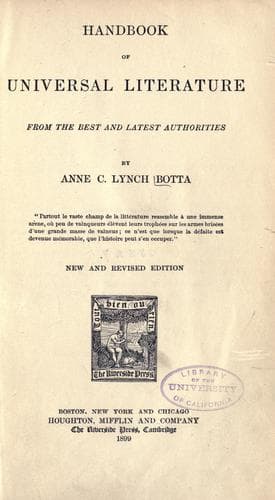
Handbook of Universal Literature, From the Best and Latest AuthoritiesBotta, Anne C. Lynch (Anne Charlotte Lynch)
History
Handbook of Universal Literature, From the Best and Latest Authorities
Botta, Anne C. Lynch (Anne Charlotte Lynch)
Literature -- History and criticism
1. DECLINE OF ROMAN LITERATURE.--With the death of Augustus began the
decline of Roman literature, and a few names only rescue the first years
of this period from the charge of a corrupt and vitiated taste. After a
while, indeed, political circumstances again became more favorable; the
dangers, which paralyzed genius and talent, and prevented their free
exercise under Tiberius and his tyrannical successors, diminished, and a
more liberal system of administration ensued under Vespasian and Titus.
Juvenal and Tacitus then stood forth, as the representatives of the old
Roman independence. Vigor of thought communicated itself to the language;
a taste for the sublime and beautiful, to a certain extent, revived,
although it did not attain to the perfection which shed a lustre over the
Augustan age. Between the ages of Horace and Juvenal, Cicero and Tacitus,
there was a gap of half a century, in which Roman genius was slumbering.
The gradual growth of a spirit of adulation deterred all who were
qualified for the task of the historian from attempting it. Fear, during
the lifetime of Tiberius and Caligula, Claudius and Nero, and hatred,
still fresh after their deaths, rendered all accounts of their reigns
false. And the same causes which silenced the voice of history
extinguished the genius of poetry and oratory. As liberty declined,
natural eloquence decayed; the orator sought only to please the corrupt
taste of his audiences with strange and exaggerated statements; the poet
aimed to win public admiration through a style over-laden with ornament,
and florid and diffuse descriptions. Literature, in order to flourish,
requires the genial sunshine of human sympathy; it needs either the
patronage of the great, or the favor of the people. Immediately after the
death of Augustus, patronage was withdrawn, and there was no public
sympathy to supply its place. In the reign of Nero, literature partially
revived; for, though the bloodiest of tyrants, he had a taste for art and
poetry, and an ambition to excel in refinement.
Public-domain text, read in full here on John Shaqi.
Reviews
Reviews
No reviews yet
Be the first to share your thoughts on this work.
Elsewhere in the archive
Join the Discussion
Join the discussion
Sign in to leave a comment or review.
Sign InorCreate an account