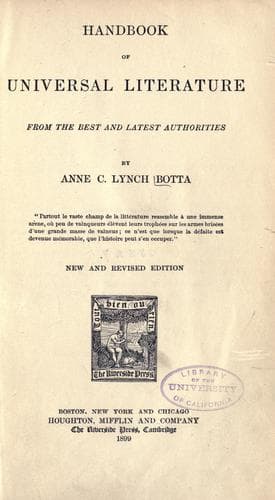
Handbook of Universal Literature, From the Best and Latest AuthoritiesBotta, Anne C. Lynch (Anne Charlotte Lynch)
History
Handbook of Universal Literature, From the Best and Latest Authorities
Botta, Anne C. Lynch (Anne Charlotte Lynch)
Literature -- History and criticism
Grazzini, called Lasca (1503-1583), is perhaps the best of the Italian
novelists after Boccaccio. His manner is light and graceful. His stories
display much ingenuity, but are often improbable and cruel in their
nature. The Fairy Tales of Strapparola (b. 1500) are the earliest
specimens of the kind in the prose literature of Italy, and this work has
been a perfect storehouse from which succeeding writers have derived a
vast multitude of their tales. To this, also, we are indebted for the
legend of "Fair Star," "Puss in Boots," "Fortunio," and others which adorn
our nursery libraries.
Firenzuola (1493-1547) occupies a high rank among the Italian novelists;
his "Golden Ass," from Apuleius, and his "Discourses of Animals" are
distinguished for their originality and purity of style.
Bandello (1480-1562) is the novelist best known to foreigners after
Boccaccio. Shakspeare and other English dramatists have drawn largely from
his voluminous writings. His tales are founded upon history rather than
fancy.
9. HISTORY.--Historical composition was cultivated with much success by
the Italians of the sixteenth century; yet such was the altered state of
things, that, except at Venice and Genoa, republics had been superseded by
princes, and republican authority by the pomp of regal courts. Home was a
nest of intrigue, luxury, and corruption; Tuscany had become the prey of a
powerful family; Lombardy was but a battle-field for the rival powers of
France and Germany, and the lot of the people was oppression and
humiliation. High independence of mind, one of the most valuable qualities
in connection with historical research, was impossible under these
circumstances, and yet, some of the Italian writers of this age exhibit
genius, strength of character, and a conscientious sense of the sacred
commission of the historian.
Public-domain text, read in full here on John Shaqi.
Reviews
Reviews
No reviews yet
Be the first to share your thoughts on this work.
Elsewhere in the archive
Join the Discussion
Join the discussion
Sign in to leave a comment or review.
Sign InorCreate an account