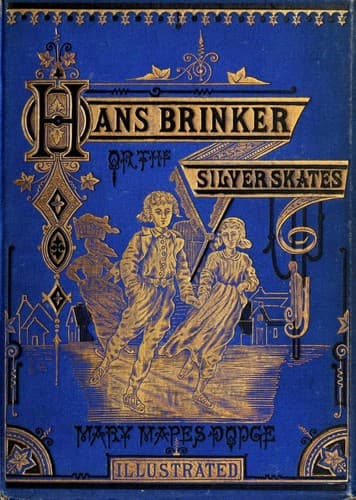
Hans Brinker; Or, The Silver SkatesDodge, Mary Mapes
History
Hans Brinker; Or, The Silver Skates
Dodge, Mary Mapes
Netherlands -- History -- 19th century -- Juvenile fiction; Siblings -- Juvenile fiction; Skating -- Juvenile fiction
"Peter could answer you better than I," said Lambert, "if you could only
understand each other, or were not such cowards about leaving your
mother-tongues. But I have often heard my grandfather speak of Brunings.
He is never tired of telling us of the great engineer--how good he was,
and how learned, and how when he died the whole country seemed to mourn
as for a friend. He belonged to a great many learned societies, and was
at the head of the State department intrusted with the care of the
dykes, and other defences against the sea. There's no counting the
improvements he made in dykes and sluices and water-mills, and all that
kind of thing. We Hollanders, you know, consider our great engineers as
the highest of public benefactors. Brunings died years ago; they've a
monument to his memory in the cathedral of Haarlem. I have seen his
portrait, and I tell you, Ben, he was right noble-looking. No wonder the
castle looks so stiff and proud. It is something to have given shelter
to such a man!"
"Yes, indeed," said Ben. "I wonder, Van Mounen, whether you or I will
ever give any old building a right to feel proud--Heigho! there's a
great deal to be done yet in this world and some of us who are boys now,
will have to do it. Look to your shoe latchet, Van, it's unfastened."
XIII
A CATASTROPHE
It was nearly one o'clock when Captain van Holp and his command entered
the grand old city of Haarlem. They had skated nearly seventeen miles
since morning, and were still as fresh as young eagles. From the
youngest (Ludwig van Holp, who was just fourteen) to the eldest, no less
a personage than the captain himself, a veteran of seventeen, there was
but one opinion--that this was the greatest frolic of their lives. To be
sure, Jacob Poot had become rather short of breath, during the last mile
or two, and perhaps he felt ready for another nap; but there was enough
jollity in him yet for a dozen. Even Carl Schummel, who had become very
intimate with Ludwig during the excursion, forgot to be ill-natured. As
for Peter, he was the happiest of the happy, and had sung and whistled
so joyously while skating that the staidest passers-by had smiled as
they listened.
"Come, boys! it's nearly tiffin[20] hour," he said, as they neared a
coffee-house on the main street. "We must have something more solid than
the pretty maiden's gingerbread"--and the captain plunged his hands into
his pockets as if to say, "There's money enough here to feed an army!"
[Footnote 20: Lunch.]
"Hollo!" cried Lambert, "what ails the man?"
Peter, pale and staring, was clapping his hands upon his breast and
sides--he looked like one suddenly becoming deranged.
"He's sick!" cried Ben.
"No, he's lost something," said Carl.
Peter could only gasp--"the pocketbook! with all our money in it--it's
gone!"
For an instant all were too much startled to speak.
Carl at last came out with a gruff,
Public-domain text, read in full here on John Shaqi.
Reviews
Reviews
No reviews yet
Be the first to share your thoughts on this work.
Join the Discussion
Join the discussion
Sign in to leave a comment or review.
Sign InorCreate an account