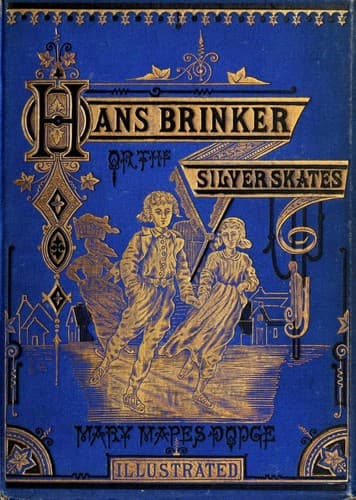
Hans Brinker; Or, The Silver SkatesDodge, Mary Mapes
History
Hans Brinker; Or, The Silver Skates
Dodge, Mary Mapes
Netherlands -- History -- 19th century -- Juvenile fiction; Siblings -- Juvenile fiction; Skating -- Juvenile fiction
"Yes, with falsehood and treachery they soon obtained an entrance into
the city, promising protection and forgiveness to all except those whom
the citizens themselves would acknowledge as deserving of death."
"You don't say so!" said Lambert, quite interested; "that ended the
business, I suppose."
"Not a bit of it," returned Ben, "for the Duke of Alva had already given
his son orders to show mercy to none."
"Ah! there was where the great Haarlem massacre came in. I remember now.
You can't wonder that the Hollanders dislike Spain when you read of the
way they were butchered by Alva and his hosts, though I admit that our
side sometimes retaliated terribly. But as I have told you before, I
have a very indistinct idea of historical matters. Everything is utter
confusion--from the Flood to the battle of Waterloo. One thing is plain,
however, the Duke of Alva was about the worst specimen of a man that
ever lived."
"That gives only a faint idea of him," said Ben, "but I hate to think of
such a wretch. What if he _had_ brains, and military skill, and all
that sort of thing! Give me such men as Van der Werf, and--what now?"
"Why," said Van Mounen, who was looking up and down the street, in a
bewildered way. "We've walked right past the Museum, and I don't see the
boys. Let us go back."
XXV
LEYDEN
The boys met at the Museum, and were soon engaged in examining its
extensive collection of curiosities, receiving a new insight into
Egyptian life ancient and modern. Ben and Lambert had often visited the
British Museum, but that did not prevent them from being surprised at
the richness of the Leyden collection. There were household utensils,
wearing apparel, weapons, musical instruments, sarcophagi, and mummies
of men, women, and cats, ibexes and other creatures. They saw a massive
gold armlet that had been worn by an Egyptian King at a time when some
of these same mummies, perhaps, were nimbly treading the streets of
Thebes; and jewels and trinkets such as Pharaoh's daughter wore, and the
children of Israel borrowed when they departed out of Egypt.
There were other interesting relics, from Rome and Greece, and some
curious Roman pottery which had been discovered in digging near the
Hague--relics of the days when the countrymen of Julius Cæsar had
settled there. Where have they not settled? I for one would hardly be
astonished if relics of the ancient Romans should some day be found deep
under the grass growing round the Bunker-hill monument.
Public-domain text, read in full here on John Shaqi.
Reviews
Reviews
No reviews yet
Be the first to share your thoughts on this work.
Elsewhere in the archive
Join the Discussion
Join the discussion
Sign in to leave a comment or review.
Sign InorCreate an account