Health Through Will PowerWalsh, James J. (James Joseph)
Science
Health Through Will Power
Walsh, James J. (James Joseph)
Mental healing; Mental health; Will
Failure to secure results is almost inevitable when conscious use of
the will comes into the problem. As a rule a direct appeal should not
be made to people to use their wills, but they should be aroused and
stimulated in various ways and particularly by the force of example.
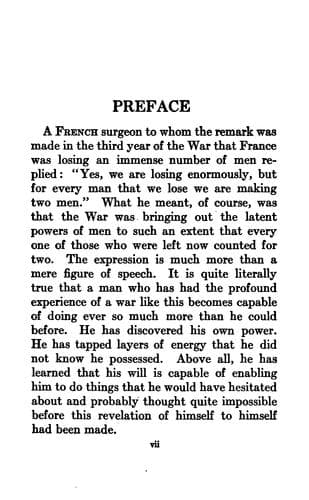
What has made it so comparatively easy for our young soldiers to use
their wills and train their bodies and get into a condition where they
are capable of accomplishing what they would have thought quite
impossible before, has been above all the influence of example. A lot
of other young men of their own age are standing these things
exemplarily. They are seen performing what is expected of them without
complaint, or at least without refusal, and so every effort is put
forth to do likewise without any time spent on reflection as to how
{91} difficult it all is or how hard to bear or how much they are to
be pitied. It is not long before what was hard at first becomes under
repetition even easy and a source of fine satisfaction. Getting up at
five in the morning and working for sixteen hours with only
comparatively brief intervals for relaxation now and then, and often
being burdened with additional duties of various kinds which must be
worked in somehow or other, seems a very difficult matter until one
has done it for a while. Then one finds everything gets done almost
without conscious effort. Will power flows through the body and lends
hitherto unexpected energy, but of this there is no consciousness;
indeed, conscious reflection on it would hamper action. No wonder that
as a result of the facility acquired, one comes to readily credit the
assumption that the will is a spiritual power and that some source of
energy apart from the material is supplying the initiative and the
resources of vitality that have made accomplishment so much easier
than would have been imagined beforehand. This is quite literally what
training of the will means: training ourselves to use all our powers
to the best advantage, not putting obstacles in their way nor brakes
on their exertion, but {92} also not thinking very much about them or
making resolutions. The way to do things is to do them, not think
about them.
Professor James is, as always, particularly happy in his mode of
expressing this great truth. He insists that the way to keep the will
active is not by constantly thinking about it and supplying new
motives and furbishing up old motives for its activity, but by
cultivating the faculty of effort. His paragraph in this regard is of
course well known, and yet it deserves to be repeated here because it
represents the essence of what is needed to make the will ready to do
its best work. He says:
Public-domain text, read in full here on John Shaqi.
Reviews
Reviews
No reviews yet
Be the first to share your thoughts on this work.
Join the Discussion
Join the discussion
Sign in to leave a comment or review.
Sign InorCreate an account