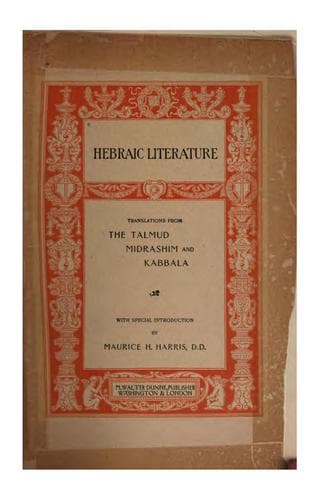
Hebraic Literature; Translations from the Talmud, Midrashim and Kabbala
Religion
Hebraic Literature; Translations from the Talmud, Midrashim and Kabbala
Hebrew literature -- Translations into English
"Go," said he, "sail to different countries, dispose of these goods, and
that which thou mayest receive for them shall be thy own."
The slave sailed away upon the broad ocean, but before he had been long
upon his voyage a storm overtook him; his ship was driven on a rock and
went to pieces; all on board were lost, all save this slave, who swam to
an island shore near by. Sad, despondent, with naught in the world, he
traversed this island, until he approached a large and beautiful city;
and many people approached him joyously, shouting, "Welcome! welcome!
Long live the king!" They brought a rich carriage, and placing him
therein, escorted him to a magnificent palace, where many servants
gathered about him, clothing him in royal garments, addressing him as
their sovereign, and expressing their obedience to his will.
The slave was amazed and dazzled, believing that he was dreaming, and
all that he saw, heard, and experienced was mere passing fantasy.
Becoming convinced of the reality of his condition, he said to some men
about him for whom he experienced a friendly feeling:--
"How is this? I cannot understand it. That you should thus elevate and
honor a man whom you know not, a poor, naked wanderer, whom you have
never seen before, making him your ruler, causes me more wonder than I
can readily express."
"Sire," they replied, "this island is inhabited by spirits. Long since
they prayed to God to send them yearly a son of man to reign over them,
and He has answered their prayers. Yearly He sends them a son of man,
whom they receive with honor and elevate to the throne; but his dignity
and power ends with the year. With its close his royal garments are
taken from him, he is placed on board a ship and carried to a vast and
desolate island, where, unless he has previously been wise and prepared
for this day, he will find neither friend nor subject, and be obliged to
pass a weary, lonely, miserable life. Then a new king is selected, and
so year follows year. The kings who preceded thee were careless and
indifferent, enjoying their power to the full, and thinking not of the
day when it should end. Be wiser thou; let our words find rest within
thy heart."
The newly-made king listened attentively to all this, and felt grieved
that he should have lost even the time he had already missed for making
preparations for his loss of power.
He addressed the wise man who had spoken, saying, "Advise me, oh, spirit
of wisdom, how I may prepare for the days which will come upon me in the
future."
Public-domain text, read in full here on John Shaqi.
Reviews
Reviews
No reviews yet
Be the first to share your thoughts on this work.
Elsewhere in the archive
Join the Discussion
Join the discussion
Sign in to leave a comment or review.
Sign InorCreate an account