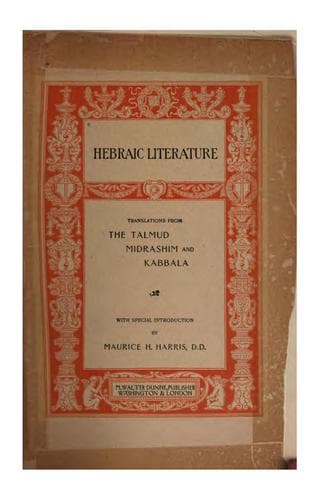
Hebraic Literature; Translations from the Talmud, Midrashim and Kabbala
Religion
Hebraic Literature; Translations from the Talmud, Midrashim and Kabbala
Hebrew literature -- Translations into English
"Naked thou camest to us and naked thou wilt be sent to the desolate
island of which I have told thee," replied the other. "At present thou
art king, and may do as pleaseth thee; therefore send workmen to this
island; let them build houses, till the ground, and beautify the
surroundings. The barren soil will be changed into fruitful fields,
people will journey there to live, and thou wilt have established a new
kingdom for thyself, with subjects to welcome thee in gladness when thou
shalt have lost thy power here. The year is short, the work is long:
therefore be earnest and energetic."
The king followed this advice. He sent workmen and materials to the
desolate island, and before the close of his temporary power it had
become a blooming, pleasant, and attractive spot. The rulers who had
preceded him had anticipated the day of their power's close with dread,
or smothered all thought of it in revelry; but he looked forward to it
as a day of joy, when he should enter upon a career of permanent peace
and happiness.
The day came; the freed slave, who had been made king, was deprived of
his authority; with his power he lost his royal garments; naked he was
placed upon a ship, and its sails set for the desolate isle.
When he approached its shores, however, the people whom he had sent
there came to meet him with music, song, and great joy. They made him a
prince among them, and he lived with them ever after in pleasantness and
peace.
The wealthy man of kindly disposition is God, and the slave to whom He
gave freedom is the soul which He gives to man. The island at which the
slave arrives is the world; naked and weeping he appears to his parents,
who are inhabitants that greet him warmly and make him their king. The
friends who tell him of the ways of the country are his "good
inclinations." The year of his reign is his span of life, and the
desolate island is the future world, which he must beautify by good
deeds, "the workmen and material," or else live lonely and desolate
forever.
* * * * *
The Emperor Adrian, passing through the streets of Tiberias, noticed a
very old man planting a fig tree, and pausing, said to him:--
"Wherefore plant that tree? If thou didst labor in thy youth, thou
shouldst now have a store for thy old age, and surely of the fruit of
this tree thou canst not hope to eat."
The old man answered:--
"In my youth I worked, and I still work. With God's good pleasure I may
e'en partake of the fruit of this tree I plant. I am in His hands."
"Tell me thy age," said the emperor.
"I have lived for a hundred years."
"A hundred years old, and still expect to eat from the fruit of this
tree?"
"If such be God's pleasure," replied the old man; "if not, I will leave
it for my son, as my father left the fruit of his labor for me."
"Well," said the emperor, "if thou dost live until the figs from this
tree are ripe, I pray thee let me know of it."
Public-domain text, read in full here on John Shaqi.
Reviews
Reviews
No reviews yet
Be the first to share your thoughts on this work.
Elsewhere in the archive
Join the Discussion
Join the discussion
Sign in to leave a comment or review.
Sign InorCreate an account