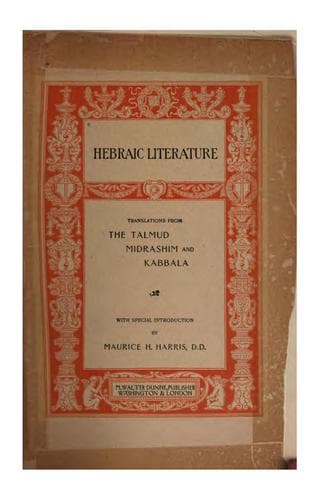
Hebraic Literature; Translations from the Talmud, Midrashim and Kabbala
Religion
Hebraic Literature; Translations from the Talmud, Midrashim and Kabbala
Hebrew literature -- Translations into English
Ten measures of wisdom came down to the world; the land of Israel
received nine and the rest of the world but one only. Ten measures of
beauty came down to the world; Jerusalem monopolized nine and the rest
of the world had only one. Ten measures of riches came down to the
world; Rome laid hold of nine and left the rest of the world but one for
a portion. Ten measures of poverty came down to the world; nine fell to
the lot of Babylon and one to the rest of the world. Ten measures of
pride came down to the world; Elam appropriated nine and to the rest of
the world but one remained over. Ten measures of bravery came to the
world; Persia took nine, leaving but one for the rest of the world. Ten
measures of vermin came to the world; nine fell to the Medes and one to
the rest of the world. Ten measures of sorcery came down to the world;
Egypt received nine and one was shared by the rest of the world. Ten
measures of plagues came into the world; nine measures were alloted to
the swine and the rest of the world had the other. Ten measures of
fornication came into the world; nine of these belong to the Arabs and
to the rest of the world the other. Ten measures of impudence found its
way into the world; Mishan appropriated nine, leaving one to the rest of
the world. Ten measures of talk came into the world; women claimed nine,
leaving the tenth to the rest of the world. Ten measures of early rising
came into the world; they of Ethiopia received nine and the rest of the
world one only. Ten measures of sleep came to the world; the servants
took nine of them, leaving one measure to the rest of the world.
_Kiddushin_, fol. 49, col. 2.
Ten different sorts of people went up from Babylon:--(1.) Priests, (2.)
Levites, (3.) Israelites, (4.) Disqualified Cohanim, (5.) Freedmen, (6.)
Illegitimate, (7.) Nethinim, (8.) Unaffiliated ones, and (10.)
Foundlings.
Ibid., fol. 63, col. 1.
Ten characteristics mark the phlebotomist:--He walks sideling along; he
is proud; he stoops awhile before seating himself; he has an envious and
evil eye; he is a gourmand, but he defecates little at a time; he is
suspected of incontinence, robbery, and murder.
Ibid., fol. 82, col. 1.
Rabbi Chanena ben Agil asked Rabbi Cheya ben Abba, "Why does the word,
'signifying that it may be well with thee' not occur in the first copy
of the ten commandments (Exod. xx.) as it does in the second?" (Deut.
v.) He replied, "Before thou askest me such a question, first tell me
whether the word occurs in Deuteronomy or not? for I don't know if it
does." The required answer was given by another Rabbi, "The omission of
the word in the first publication of the ten commandments is due to the
foresight of what was to befall the first tables, for if the word good
had been in the tables, and broken withal, then goodness would have
ceased to bless the sons of Israel."
_Bava Kama_, fol. 55, col. 1.
Public-domain text, read in full here on John Shaqi.
Reviews
Reviews
No reviews yet
Be the first to share your thoughts on this work.
Elsewhere in the archive
Join the Discussion
Join the discussion
Sign in to leave a comment or review.
Sign InorCreate an account