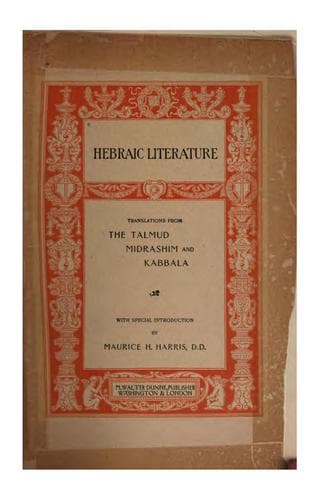
Hebraic Literature; Translations from the Talmud, Midrashim and Kabbala
Religion
Hebraic Literature; Translations from the Talmud, Midrashim and Kabbala
Hebrew literature -- Translations into English
The Mishnic Rabbis have ordained that ten cups of wine be drunk in the
house by the funeral party; three before supper, to whet the appetite;
three during supper, to aid digestion; and four after the meal, at the
recitation of the four benedictions. Afterward four complimentary cups
were added, one in honor of the precentors, one in honor of the
municipal authorities, another in remembrance of the Temple, and the
fourth in the memory of Rabbon Gamliel. Drunkenness so often ensued on
these occasions that the number had to be curtailed to the original ten
cups. The toast to the memory of Rabbon Gamliel was to commemorate his
endeavors to reduce the extravagant expenses at burials, and the
consequent abandonment of the dead by poor relations. He left orders
that his own remains should be buried in a linen shroud, and since then,
says Rav Pappa, corpses are buried in canvas shrouds about a zouz in
value.
Ibid., fol. 8, col. 2.
At the age of ten years a child should begin to study the Mishna.
Ibid., fol. 50, col. 1.
Rabbi the Holy, when dying, lifted up his ten fingers toward heaven and
said:--"Lord of the Universe, it is open and well-known unto Thee that
with these ten fingers I have labored without ceasing in the law, and
never sought after any worldly profit with even so much as my little
finger; may it therefore please Thee that there may be peace in my
rest!" A voice from heaven immediately responded (Isa. lvii. 2), "He
shall enter peace: they shall rest in their beds."
Ibid., fol. 104, col. 2.
Public-domain text, read in full here on John Shaqi.
Reviews
Reviews
No reviews yet
Be the first to share your thoughts on this work.
Elsewhere in the archive
Join the Discussion
Join the discussion
Sign in to leave a comment or review.
Sign InorCreate an account