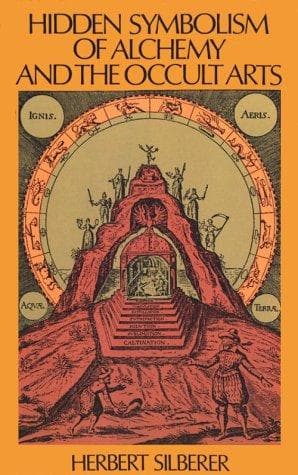
Hidden Symbolism of Alchemy and the Occult ArtsSilberer, Herbert
Religion
Hidden Symbolism of Alchemy and the Occult Arts
Silberer, Herbert
Alchemy; Society of Rosicrucians; Symbolism (Psychology)
Frizius and Fludd contribute also a letter supposed to have been sent by
rosicrucians to a German candidate. It says, “Since you are such a stone
as you desire, and such a work ... cleanse yourself with tears, sublimate
yourself with manners and virtues, decorate and color yourself with the
sacramental grace, make your soul sublime toward the subtile meditation of
heavenly things, and conform yourself to angelic spirits so that you may
vivify your moldering body, your vile ashes, and whiten them, and
incorruptibly and painlessly gain resurrection through J[esus] C[hrist]
O[ur] L[ord].” In another passage: “Be ye transformed, therefore, be ye
transmuted from mortal to living philosophic stones.”
In the “Clavis Philosophiae et Alchymiae Fluddanae” (published in Latin in
1633), are passages like the following: “Indeed every pious and righteous
man is a spiritual alchemist.... We understand by that a man who
understands not only how to distinguish but with the fire of the divine
spirit to separate [spagiric art] the false from the true, vice from
virtue, dark from light, the uncleanness of vice from the purity of the
spirit emulating God. For only in this way is unclean lead turned into
gold.” (P. 75.) “If one now ventures to say that the Word of Christ or the
Holy Ghost of wisdom dwells in the microcosmic heaven [i.e., in the soul
of man] we should not decry the blind children of the world as godless and
abandoned. [But certainly the divine spirit is, as is later averred, the
rectangular stone in us, on which we are to build.] This divine spark is,
however, continuous and eternal; it is our gold purchasable of Christ....
So it happens in accordance with the teachings of Christ, or the Word
become flesh, that if the true alchemists keep on seeking and knocking,
they attain to the knowledge of the living fire.” (P. 81.) So again the
important knocking and seeking of masonic symbolism, and this indeed, for
the purpose of learning to know a fire.
In reference to the really elevating thoughts of the “Summum Bonum,”
Katsch, enthusiastic about these ideas, exclaims: “What language, what an
unflinching courage, what a dignified humility. Even the most reluctant
will not be able to avoid the admission that here quite unexpectedly he
has ... met the original and ideal form of freemasonry.”
The comparison of masonry and alchemy remains true even if we work more
critically than Katsch, who is accused of many inaccuracies. I recall for
instance the later researches of the thorough and far-seeing Dr. Ludwig
Keller.
For the illumination of the darkness that has spread over the past of
freemasonry, Keller shows us (B. W. and Z., pp. 1, 2) the rich material of
symbolism that is offered the diligent student, first of all in the very
copious literature, printed matter, and especially in the manuscripts,
that is known by the name of Chemistry or Alchemy.
Public-domain text, read in full here on John Shaqi.
Reviews
Reviews
No reviews yet
Be the first to share your thoughts on this work.
Elsewhere in the archive
Join the Discussion
Join the discussion
Sign in to leave a comment or review.
Sign InorCreate an account