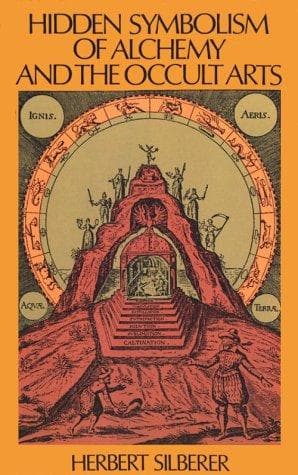
Hidden Symbolism of Alchemy and the Occult ArtsSilberer, Herbert
Religion
Hidden Symbolism of Alchemy and the Occult Arts
Silberer, Herbert
Alchemy; Society of Rosicrucians; Symbolism (Psychology)
The coexistence of the material meaning with the functional is not
entirely puzzling to the student of psychoanalysis. Two facts must be kept
in mind throughout.
In the first place, we are acquainted with the principle of multiple
determination or condensation. The multiplicity of the dimly moving latent
dream thoughts condenses into a few clear dream forms or symbols, so that
one symbol continually, as it were, appears as the representative of
several ideas, and is therefore interpretable in several ways. That it
should be susceptible of more than one interpretation can cause no
surprise because the fundamental significance (the latent thoughts) were
the very ones that, by association, caused the selection of the symbols
from an infinite series of possibilities. In the shaping of the dream, and
therefore in the unconscious dream work, only such pictorial elements
could penetrate into consciousness as satisfied the requirements of the
multiple determination. The principle of multiple determination is valid
not only within the material and the functional categories, but makes the
fusion of both in the symbol in question to some extent intelligible.
Elements of both categories take an active part in the choice of the
symbol. On the one hand, a number of affects press on towards the symbolic
representation of objects to which they direct themselves (objects of
love, hate, etc.). On the other hand, the psyche takes cognizance of its
own impulses, play of affects, etc., and this perception will gain
representation. Both impulses take part in the choice of those symbols
which thrust themselves into the nascent consciousness of phantasy, and so
the dream, like the poem, etc., besides the symbolism of the wish
tendencies (material categories) that animate them, bears the stamp of the
psychic authorship (functional category) of the dreamer or the author.
[Ferenczi defends the view for the myth also that the material symbolism
must coincide with the functional (Imago I, p. 283).]
Public-domain text, read in full here on John Shaqi.
Reviews
Reviews
No reviews yet
Be the first to share your thoughts on this work.
Elsewhere in the archive
Join the Discussion
Join the discussion
Sign in to leave a comment or review.
Sign InorCreate an account