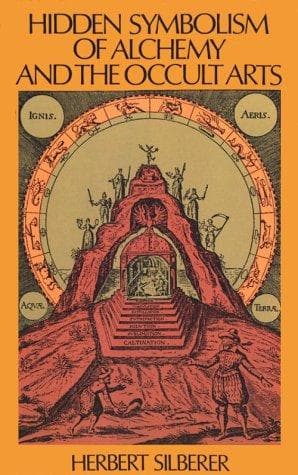
Hidden Symbolism of Alchemy and the Occult ArtsSilberer, Herbert
Religion
Hidden Symbolism of Alchemy and the Occult Arts
Silberer, Herbert
Alchemy; Society of Rosicrucians; Symbolism (Psychology)
From a discussion of the dream it next appeared that T., who, as far as I
knew, entertained a pronounced aversion to homosexuality, had read a short
time before a detailed account of a notorious trial then going on in
Germany, that was concerned with real homosexual actions. [In
consciousness, of course. In the suppressed depths of unconsciousness the
infantile homosexual component also will surely be found.] An incident
from it, probably supported by some unconscious impulse, crowded its way
into the dream as an erotic wish, hence the affectionate scene in the
railway train. So far the matter would be intelligible even if in an
erotic day dream the image of a boy, considering the existing sexual
tendency of T., had been resolutely rejected by him. How are the other
processes in the dream related to it? Do they not at first sight appear
unconnected or meaningless?
And yet in them are manifested the fulfillment of the wish implied in the
erotic excitement in the company of the boy. The homosexual action of this
wish fulfillment would have been insufferable to the dream censor; it must
be intimated symbolically. And the remainder of the dream is accordingly
nothing but a dextrous veiling of a procedure hostile to the censor.
Even that the train comes to a standstill is a polite paraphrase.
[Paraphrase as the dreamer communicated to me, of an actual physical
condition—an erection.] Similar meaning is conveyed by the word station,
which reminds us of the Latin word status (from stare, to stand). The
scene in the car recalls moreover the joke in a story which often used to
occur to T. “A lady invited to a reception, where there were also young
girls, a _Hungarian_ [accentuated now, on account of what follows] (the
typical Vienna joker), who is feared on account of his racy wit. She
enjoined him at the same time, in view of the presence of the girls, not
to treat them to any of his spicy jests. The Hungarian agreed and appeared
at the party. To the amazement of the lady, he proposed the following
riddle: ‘’One can enter from in front, or from behind, only one has to
stand up.’ Observing the despair of the lady, he, with a sly, innocent
look, said, ‘But well then, what is it? Simply a trolley car.’ Next day
the daughter of the house appeared before her schoolmates in the high
school with the following:‘’Girls, I heard a great joke yesterday; one can
go in from in front or behind, only one must be stiff.’ ” [A neat
contribution, by the way, to the psychology of innocent girlhood.] The
anecdote was related to T. by a man later known to him as a homosexual. T.
had been with few Hungarians, but with these few, homosexuality had been,
as it happened, a favorite subject of conversation.
Public-domain text, read in full here on John Shaqi.
Reviews
Reviews
No reviews yet
Be the first to share your thoughts on this work.
Join the Discussion
Join the discussion
Sign in to leave a comment or review.
Sign InorCreate an account